Κολέγιο CITY College
|
News & Events

Professional Development Seminar Online: Improve your web presence with SEO
12 November 2020
10/11/2020

Seminar Series in Neuroscience and Neuropsychology
November - December 2020 The Psychology Department of CITY College invites you to join the Online Seminar Series in Neuroscience and Neuropsychology featuring distinguished invited speakers from top universities to elaborate on the topic from different perspectives. Who should attend: The seminars are addressed to psychologists and psychology students. Online Participation Form Join the Webinars Our Psychology Department continues to offer the Personal and Professional Development Seminar Series in Neuroscience and Neuropsychology online, with great success. Dr. Athena Demertzi, Tenured Researcher at the GIGA Research Institute University of Liege (BE), presented the seminar: WED 18 NOVEMBER 2020 | 16.00-19.00 EET Consciousness - Behavior and neural correlates Dr Athena Demertzi Tenured Researcher at GIGA Research Institute University of Liege (BE) Seminar Overview: The neural correlates of consciousness constitute the minimal set of neuronal events and mechanisms sufficient for a specific conscious percept. Empirical approaches to discover neural correlates of subjective phenomena will be discussed in this lecturer; that is, neural changes which necessarily and regularly correlate with a specific experience. Join and share! WED 25 NOVEMBER 2020 | 16.00-19.00 EET New developments in neurofeedback research Dr Eddy Davelaar Reader in Psychology at Birkbeck University of London (UK) Seminar Overview: Neurofeedback (NFB), also called neurotherapy or neurobiofeedback, is a type of biofeedback that uses real-time displays of brain activity—most commonly electroencephalography (EEG)—in an attempt to teach self-regulation of brain function. In this lecture we are going to discover the state of the art in neurofeedback research. Join and share! WED 2 DECEMBER 2020 | 16.00-19.00 EET Cognitive Rehabilitation and Neuroimaging after Stroke Dr Rosalia Dacosta Aguayo Researcher at University of Barcelona (ES) Seminar Overview: A stroke is a medical condition in which poor blood flow to the brain causes cell death. There are two main types of stroke: ischemic, due to lack of blood flow, and hemorrhagic, due to bleeding. Both cause parts of the brain to stop functioning properly. In this lecture we are going to explore potential neuromarkers that indicate good cognitive rehabilitation after stroke based on neuroimaging findings. Join and share! WED 9 DECEMBER 2020 | 16.00-19.00 EET Human multisensory perception and neurocognitive development across the lifespan Prof. Shu Chen Li Professor in Neuroscience at Technical University of Dresden (DE) Seminar Overview: Daily life confronts us with information across multiple senses in parallel and we must somehow unite these sensations into a coherent interpretation of the world. This lecture will explain how the human brain comes to develop this complex ability, and how brain can come to experience multisensory integration in remarkable ways. Join and share! WED 16 DECEMBER 2020 | 16.00-18.00 EET Elders’ Brain Dr Valia Rodriguez Lecturer in Neuropyshiology, Aston University (UK) Seminar Overview: Ageing causes changes to the brain size, vasculature, and cognition. The brain shrinks with increasing age and there are changes at all levels from molecules to morphology. Incidence of stroke, white matter lesions, and dementia also rise with age, as does level of memory impairment and there are changes in levels of neurotransmitters and hormones. In this lecture we are going to discuss these changes and how they affect elders’ performance. Join and share! 18.00-19.00 EET Youthful Brains in Older Adults Dr Alexandra Touroutoglou Assistant Professor at Harvard Medical School (USA) Seminar Overview: Decline in cognitive skills, especially in memory, is often viewed as part of “normal” aging. Yet some individuals “age better” than others. In this lecture we will examine the hypothesis if superagers (older individuals with youthful memory performance) would exhibit preserved neuroanatomy in key brain networks subserving memory. Join and share! Contact: For further information please contact Dr Manousos Klados at mklados@citycollege.sheffield.eu Ready to join? - Join via your mobile device, laptop or PC - Enter the event 10' earlier by clicking on the 'Join' button (you will be requested to enter your email to join in) - Make sure that you have your camera and microphone turned off - Make sure you PIN the presenter's image so you can have a full screen view. Join the Webinar Postgraduate studies in Neuropsychology at CITY College For those interested in following studies in the relatively young and particularly interesting science of Neuropsychology, the Psychology Department of CITY College offers the following postgraduate programmes: MA in Clinical Neuropsychology MSc in Cognitive Neuropsychology For more information, please send an email at acadreg@citycollege.sheffield.eu
06/11/2020
The English Studies Department Concurs with Building a Sense-of-Belonging
Have you ever wondered what can help us grow as individuals, build attachments, communicate effectively, form identities, manage loneliness and, overall, help us live longer? Insights to these areas and more were provided in the Personal and Professional Development Seminar series offered by the English Studies Department. The seminar delivered today, Tuesday, 3rd November 2020, by Academic Director of Undergraduate Programmes and Lecturer in the Psychology Department, CITY College, Dr Vassilis Chatzimpyros, provides insights to the above questions in the seminar titled: “Sense of belonging: Challenges in connecting within a cyber world”; a seminar that appears even more relevant and timely given the reality we have been and are currently facing. Drawing on scientific studies, Dr Chatzimpyros informs that longevity is observed and can be achieved via healthy instances of sense of belonging, in other words interpersonal relationships (family, friends, colleagues, etc) and group memberships that come to fulfill our basic need as humans, that of being social – amongst others – and that of interaction and communication. It is by establishing a sense of belonging that we build our identity, and we develop that identity through a sense of belonging. As humans, we may and can belong to various social groups that give us a sense of who we are, that offer support and act as a protection mechanism. In these groups, we form attachments on many different levels that also contribute to our sense of belonging. As Dr Chatzimpyros informs, a lack of sense of belonging can certainly result in feelings of loneliness, detachment and feeling disconnected. These feelings can further contribute to the development of stress, anxiety, depression, frustration and even helplessness. One should also be wary of instances of a fake idea of sense of belonging. The Internet and social media may have originally assisted in dispersing information and keeping people connected, but they can also contribute to this sense of detachment, feeling disconnected, lonely and may even prompt individuals to develop an identity clash. Dr Chatzimpyros emphasizes that if social media are used for two hours or more daily that can increase social anxiety, lower one’s self-esteem and increase chances of social isolation. This of course is not simply due to the overexposure we all have to the internet and social media given COVID-19 and the pandemic restrictions, but it ties back to developing an addiction to our online world and presence. Focusing on this, Dr Chatzimpyros highlights that there can be a clash between the real world and the online world that we as individuals and as group members experience. That clash is intensified if we consider fake realities, photoshopped images, misinformation, overload of information that does not allow us to critically examine and process the information that we come across. As a result, the online world can certainly be a place to establish a sense of belonging, particularly during times when real life social interaction is limited, but it can contribute to online addiction, loneliness, and hinder us from developing an actual and effective sense of belonging. In times of crisis we are more vulnerable on a mental, social, occupational, and even economic level. We are uncertain about the present and future, things are thrown out of balance. It takes courage to state that not everything is ok, that there are not only going to be “happy Instagram moments” and take a step back to re-evaluate our perspectives and consider our response to various situations and how we want to deal with and manage those situations. Sense-of-belonging, as Dr Chatzimpyros confirms, can be that protective factor we need that can be achieved if we: build meaningful connections, foster wellness, find purpose in what we do, embrace healthy thoughts and seek help. *In the spirit of establishing sense-of-belonging, CITY College not only offers its students the opportunity to join groups and expand their group memberships and attachments, it also offers opportunities for networking via seminars offered online and provides counselling services for those seeking help. More information
06/11/2020

Prof. Ketikidis re-elected Honorary Member of the Management Board of SEVE
Prof. Panagiotis Ketikidis, Vice Principal of CITY College was re-elected Honorary Member of the Management Board of the Greek International Business Association (SEVE). The newly elected Members of the Board hold top positions in the academia and industry. Apart from representing the administration of extrovert sectors of the Greek economy, SEVE aims at liaising with the academic and research community, a relationship that always proves mutually beneficial. CITY College is highly involved with local and national business associations, a practice that is inherent in our philosophy to bring closer academia with the industry.
05/11/2020

Prof. Ketikidis re-elected in the Executive Board of the European Business Angels Network (EBAN)
Congratulations to Prof. Panagiotis Ketikidis, Vice Principal of CITY College, on his re-election as member in the new Executive Board 2020-2022 of the European Business Angels Network (EBAN). Prof. Ketikidis has been involved in EBAN’s activities the past years participating in its events and initiatives. What is EBAN EBAN is the pan-European representative for the early stage investor community gathering over 150 member organizations in more than 50 countries today. Established in 1999 by a group of pioneer angel networks in Europe with the collaboration of the European Commission and EURADA, EBAN represents a sector estimated to invest 11.4 billion Euros a year and playing a vital role in Europe’s future, notably in the funding of SMEs. EBAN fuels Europe’s growth through the creation of wealth and jobs.
05/11/2020

Professional Development Seminar Online: Neural Networks and Deep Learning
5 November 2020
03/11/2020

Become an Academic Representative
What is an Academic Representative An academic representative (Academic Rep) is an undergraduate or postgraduate student volunteer who represents students on a programme to their department; communicates class issues to CSU officers, participate to one student & staff committee meeting per semester, one senate meeting per semester with the Officers of the CSU, as well as to the biannual student course boards. The recruitment of academic representatives is done every year during the 4th week of the winter semester and the position is held for an entire academic year. All enrolled students are privileged to declare candidacy, unless they are on disciplinary probation. Student Volunteers are encouraged to support an educational environment, represent the student body appropriately and should show good citizenship, both on and off campus. CSU and Academic Reps act as the students’ voice and requires a responsible attitude in order to make this voice productively transmitted and received. I want to be an Academic Rep Certificates of Accreditation We recognise the Academic Reps contribution and time! The Student Services Department will provide online certificates of accreditation for your time as an Academic Rep! Become an Academic Rep / Academic Rep Role (PDF)
02/11/2020

Professional Development Seminars Online by our Computer Science Department
November - December 2020
02/11/2020
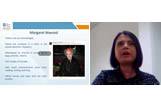
The English Studies Department encounters Margaret Atwood
The new academic year finds us resuming classes in a familiar and yet altered reality due to the Covid-19 pandemic. The Personal and Professional Development Seminar series offered by the English Studies Department similarly resumed but in an online capacity. Launching the series in the Autumn 2020-21 semester on Tuesday, 20th October 2020, is Dr Filio Chasioti’s seminar titled: “It was dark inside the Wolf”: Margaret Atwood and her Worlds demonstrating not only an intriguing approach and insight to Atwood but also raising awareness towards this oscillating sense of the familiar and the ability to defamiliarize. As expected from any avid fan but even more so from an avid researcher, Dr Chasioti initially introduces and provides context to the author, Margaret Atwood, whom most of us probably know due to the TV series adaptation The Handmaid’s Tale (2017-). She establishes thematic areas that Atwood’s short stories and novels touch upon such as social realism, historical fiction, dystopian novels and – as Atwood has characterized them – ustopian novels. Drawing on Atwood’s MasterClass on writing, Dr Chasioti utilizes the phrase “It was dark inside the Wolf” not only to remind us of the well-known fairytale Little Red-Riding Hood but even more so to point out the different perspectives from which a story can be told that could defamiliarize us from what we already think we know. This element of focalization segues the topic towards the focus of the seminar, the MaddAddam trilogy (Oryx and Crake (2003); The Year of the Flood (2009); MaddAddam (2013); a series that delves into areas such as the ‘ethics’ of science, corporate exploitation of resources, exploitation of the environment and ‘ecological utopianism’, post-humanism, role of spirituality ultimately deeming the series a ‘coming-of-age’ story of the speculative dystopian/ustopian genre. Dr Chasioti highlights some prevailing features in the series, namely multiple focalizers, different narrators, intertexts and the significance of memory. What is noticeable, according to Dr Chasioti, is that at a narrative level, readers are constantly estranged through multiple viewpoints, different timelines, unreliable narration, quality of memories, while at a textual level Atwood presents some unique and intriguing elements the style and function of which permits her to make the story active. In other words, Dr Chasioti highlights the ability of the author to intertwine narrative and textual style to such a degree that makes the story mutable, makes the reading experience of it (and not solely the adaptation audio-visual experience) even more unique and invites one to consider if the dystopia evident in the novel series ( as well as in other stories Atwood has created) is indeed “only” dark or if there is, as Atwood tends to stress, light and hope in dystopias/ustopias. It is no secret that dystopian fiction and apocalyptic, or post-apocalyptic texts are trending or may be over-marketed. What is encouraging, though, is to see how certain authors, like Atwood, challenge us as readers to reconsider and re-evaluate not only the genre(s), the stories/narratives but also the textual components that reveal how they are told thus potentially revealing that ‘silver-lining’, that element of ustopia.
29/10/2020
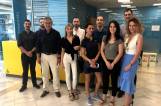
Real-life student project for 5* Grand Hotel Palace in Thessaloniki
Practicum student project for the largest 5-star conference hotel in Thessaloniki Opportunity to get first hand insights into the hotel and hospitality sector A project on examination of customer feedback via online review The largest 5-star conference hotel built in Thessaloniki, The Grand Hotel Palace, was the company-client for a real-life project of a group of undergraduate students of CITY College’s Business Administration and Economics Department. The project involved examination of customer feedback via online review. Students’ aim was to understand the academic theory behind customer reviews and then summarise the feelings, impressions and opinions of Grand Hotel Palace customers and provide recommendations to the senior management of the hotel to further enhance its reputation. Special thanks to Mr Ioannis Aslanis, General Manager and Ms Maria Chatziparachi, Guest Relations Manager of Grand Hotel Palace for offering this opportunity to our students. Students at CITY College have the opportunity to work on real-life projects, practice their skills and knowledge, and better understand the links between business theory and practice in actual settings. University-industry cooperation integrated in the education of students is highly promoted in all CITY College’s academic programmes and proves a real asset for our students. What is the Practicum? Business Practicums are supervised action learning projects designed to provide students with an opportunity to manage a project for an organization (“participating company-client”). They aim to successfully bridge academic knowledge and the development of professional skills and employability. They are team-based and normally delivered over a semester requiring students to devote an average of 150-200 hours in total (depending on the nature of the project). The student work is complemented by classroom-based teaching/mentoring. The precise nature of the project can vary enormously depending on both the nature and the needs of the organisation. Participating companies can be large corporations or small local businesses. The common denominator is a genuine need for help with a problem or appreciation of the added value of some independent research beyond the resources or capabilities of the participating company. This may be a general management problem, a marketing issue, a finance matter or any number of specific challenges.
29/10/2020

CITY College is part of the Technopolis AI Cluster
CITY College is one of the founding members of the Technopolis AI Cluster. Joining CITY College are 12 high-tech companies, Aristotle University of Thessaloniki, Helexpo (the company that organises the Thessaloniki International Fair) and the Thessaloniki ICT Business Park. View the full list of the members of the Cluster. CITY College is closely working with the industry and often establishes collaborations and partnerships with leading companies and organisations from a wide spectrum of industries.
23/10/2020

Dr Paraskakis at the 2020 European Angel Investment Summit
Dr Iraklis Paraskakis, Senior Research Officer at CITY College’s research centre, SEERC and Senior Lecturer at the Computer Science Department is invited to participate in the upcoming 2020 European Angel Investment Summit, taking place online 28-29 October 2020. Dr Paraskakis is going to join distinguished speakers in the ‘Roundtable on Digital Finance in Emerging Markets’ that will take place 29th of October 2020, 15.00-16.00. The Summit includes great parallel sessions, exploring subjects like tax schemes, digital finance, intellectual property, and more. The event aims to put business angels in the spotlight and highlight how they bring economic dynamism by financing innovation and taking risks.
19/10/2020
  52 from 163   |