Κολέγιο CITY College
|
News & Events

Executive MBA Annual Study Week 2019 in Thessaloniki
240 managers and professionals, attending our Executive MBA delivered in 8 countries across the region, enjoyed week full of joint classes, networking and activities at our main campus in Thessaloniki! CITY College International Faculty warmly welcomed all its second year Executive MBA students from all eight cities (Thessaloniki, Belgrade, Bucharest, Sofia, Kyiv, Yerevan and Tbilisi) who participated in this year’s amazing MBA Study Week, 12-29 April 2019. As always, the study week comprised classes, seminars, lots of networking, guest lectures, free time and exciting outings. Specialised Units The study week kicked off with students attending the first track units of the MBA specialisation they have chosen and gaining insights in the one of the six (6) specialised areas of the MBA (i.e. General Management, Marketing, Finance, Logistics, Healthcare Management, Human Resources Management). MBA participants had the opportunity not only to deepen their knowledge in their field but to also meet and network with managers and professionals from other countries working in the same industry sector. 11th International Strategic People Management Workshop Themed “Aging in the Workplace”, the 11th International Strategic People Management Workshop took place within the MBA Annual Study Week in Thessaloniki. The event was organised successfully by the Laboratory for Strategic People Management on 17 April 2019. The workshop’s speakers discussed the challenges of managing the ageing workforce and stressed the importance of supporting and nurturing older employees. Project Risk Management Seminar ‘Risk Management: A way to avoid Crisis Management and Management of Losses’ was the title of the workshop led by Mr Athanasios Fourtounas, Economist and Director of Logistics in JLSG NATO (Italy), on 17th of April 2018 within the frame of the MBA Annual Study Week. Read more… Boat cruise in Thermaikos Gulf Scheduled to combine work and pleasure the Annual Study Week in Thessaloniki included the traditional boat cruise in Thermaikos, a pleasant escape from classes for our MBA students. Students enjoyed the beautiful city view of Thessaloniki while sailing, admiring the city and the warm weather along with a pint of beer or a glass of wine. Photos To view more photos from the event please see the link below: Executive MBA Annual Study Week 2019 in Thessaloniki photo gallery
02/05/2019
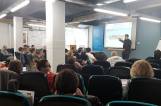
Risk Management Workshop at the MBA Study Week 2019 in Thessaloniki
‘Risk Management: A way to avoid Crisis Management and Management of Losses’ was the title of the workshop led by Mr Athanasios Fourtounas, Economist and Director of Logistics in JLSG NATO (Italy), on 15-16 of April 2019 within the context of the MBA Annual Study Week in Thessaloniki. MBA students from all 8 countries where the Executive MBA programme runs attended the workshop and had the opportunity to familiarize themselves with all the processes of Risk Management participating in a Project through a detailed and realistic scenario. Guided by Mr. Fourtounas the MBA students analysed the Project Charter and were separated to two teams to identify the project stakeholders. Then, they discussed the analysis of the identified risks through Qualitative methods so as to prioritize Opportunities and Threats. The workshop came to an end with the identification of risk responses and suggested ways monitoring our risks during the execution of the project. The smiling faces at the end of the workshop were the evidence that objective was accomplished and knowledge was gained!
24/04/2019
Risk Management Project for our business students
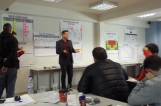
Third year bachelors students from the Business Administration and Economics Department of CITY College International Faculty had the opportunity to attend a course on ‘Project Risk Management’ and get valuable insights from the unit leader, Mr. Athanasios Fourtounas, Trainer, Economist and Director of Logistics in JLSG NATO (Italy). During this workshop-based course, students gained knowledge on the principles and the procedures of Project Risk Management in business world according to PMI standards. Moving from theory to practice, Mr Fourtounas presented to participating students a number of real case studies that they had to examine and also a full scenario of a project where they had to execute three processes: 1. Identify Stakeholders, 2. How to create a Risk Management Plan and 3. How to Identify Risks. At the second part of the workshop students worked in teams to produce products regarding Risk Analysis and Risk Responses. The first two teams presented their assignments on a Stakeholders Case study about the “Construction of the Algerian highway” and an Identify Risks Case Study about the “Construction of Opera House in Sydney”. The Risk Management unit concluded with a guest lecture by Mr Dimitrios Zaires, from an SME of Supplychains and Logistics that currently works for NATO. The speaker presented how Risk Management is applied in Supplychains and Logistic companies. Students had the opportunity to see how risk management works the real world and gain valuable insights.
24/04/2019
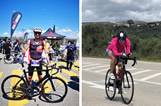
Alumnus and MBA student of CITY College at 2019 IRONMAN 70.3 triathlon in Greece
Interview with MBA student and Ironman participant, Eleftheria Vekiloglou Interview with alumnus and Ironman participant, Nikolaos Tsokanos Congratulations to CITY College/Sheffield graduate, Mr. Nikolaos Tsokanos, and MBA student, Ms. Eleftheria Vekiloglou, who took the challenge and participated in 2019 IRONMAN 70.3 triathlon that took place in Greece. Special congratulations go to Eleftheria for winning the bronze medal! The top international triathlon event took place in Costa Navarino at the Messinian area of Peloponnese, on 14 April 2019. The athletes embarked with 1.9km swimming at deep blue of the Ionian sea and continued with 90km ride and 21.1km run, making a total of 113km. More than 1.500 athletes participated while the race was attended by more than 3.500 people. The participation of Nikolaos was supported by CITY College International Faculty It was the first time for Greece to host the world’s leading triathlon event, the Ironman, joining more than 60 countries over the world from all 6 continents. More than 1 million athletes in total participate in the 260 Ironman events taking place annually. Mr. Nikolaos Tsokanos completed his undergraduate studies at the Business Administration & Economics Department of CITY College International Faculty and today is owner and General Manager of Veterinary Wholesaler - TSOKANOS SA. Ms. Eleftheria Vekiloglou is student of the Executive MBA programme in Thessaloniki and owner of Nirali Ltd. Once again, warm congratulations to both Nikos and Eleftheria! Interview with MBA student and Ironman participant, Eleftheria Vekiloglou How did you decided to participate? Two years ago I was inspired by a presentation about Triathlon, from the World Champion, Christos Garefis, who also became my trainer. I have been an athlete all my life but this was totally different and very challenging, so I started training and participating in events and races that where held in Greece. When IRONMAN announced that they will held a race for the time in Greece, I decided to participate with no second thought. How long have you been preparing for it? I had 10 months to prepare and train, and I knew that it would be hard, because of the difficulty of the race and also the competition, but I wasn't affected by that at all, I was very sure that I wanted to do it. Describe the feelings you felt. When the big day arrived I was feeling a little anxious but very sure of my self. I know I am an achiever and never give up on my targets no matter the difficulties, so I started off my race and realized that it takes a lot of courage, a lot of persistence, effort and belief in your self that you can achieve anything you want if you try hard for this. I kept remembering the words of my trainer that we do this for our physical and mental health, and I was feeling so strong and ready to face any difficulty. And at the finish line? When I was reaching the finish line I was feeling so lucky to be a part of this race. Achieving one’s goal is such a great feeling and seeing all athletes that where racing with me, Greeks, English, Americans, Germans, Italians, Spanish, and many more I realised that everyone can achieve his goals if he believes in himself. What about the lessons learnt from the Ironman experience? This experience has changed my life to the better. It was thrilling, positive, motivating and unique. Would you do it again? I will participate for sure next year again, and hope for many people to decide to change their life and the way they see themselves. As IRONMAN'S motto says: Anything is Possible!! Interview with alumnus and Ironman participant, Nikolaos Tsokanos How did you decide to participate? I like to challenge myself mentally as well as physically by setting vigorous goals and trying my best to achieve them. As ancient Greeks used to say: “νους υγιείς εν σώματι υγιεί” (A healthy mind needs a healthy body). After successfully participating in marathons, cycling and running events, the next step was to test myself in the hardest single day sports event in the world, the Ironman triathlon (swim, bike, run). When I heard that the Ironman will be orginised for the first time ever in Greece, the choice was already made. I was one of the first to register. How long have you been preparing for it? I have been preparing for almost a year. However, I increased the intensity of my workouts during the last three months before the race where I was training for up to 17 hours per week while burning over 25.000kcal. You have to be in excellent fitness condition should you wish to pursue the Ironman endeavour, otherwise you run the risk of serious injuries or even death (happened many times during Ironmen unfortunately...). In addition, smart nutrition plays a significant role in the preparation of endurance events such as the Ironman. What were the greater lessons learnt from the Ironman experience? Challenge your limits, or as Sheffield moto says: “Challenge the impossible” With hard systematic work, you can divide and allocate your workload strategically and achieve your expected results. You know, business management and professional sports have a lot in common. Devotion and persistence are unequivocally two of the most important ingredients of success. Time-management plays a pivotal role in balancing work-sports-family responsibilities. What where the biggest hardships you faced? During preparation phase, the biggest hardship was to combine training volume with work-load. I run my own family business and putting all eggs in one basket is not always easy. I was waking up every day at 5am doing my morning workouts, then heading to work for the rest of the day and then resuming training during evening or late night. I failed many times, passing out during workouts due to overtraining, missing sales targets at work etc. but I never thought to quit. Having the thought of crossing the finish line deeply engraved in my mind, I stood up and tried even harder to come closer to my goal. During race day, we faced extreme weather conditions in the swim start with over 2 meters high waves which led over 500 athletes to quit the race early. The bike course was really demanding with over 1.100m altitude gains. In the run, high temperature coupled with humidity challenged our limits both physically and mentally. Describe the feelings you felt. From discomfort, fatigue, fractured thinking, declining mood to happiness, satisfaction, achievement, gratitude - the feelings are changing with great speed inside you. Success and failure are so close to each-other as you are approaching the limits of your performance. It took me 6 and half hours to finish and it never crossed my mind to quit. Despite the hardships, I really enjoyed the race along beautiful Greek sceneries and amazing people who were supporting us throughout the whole race. And at the the finish line? One of the greatest moments in my life, totally exhilarating!!! All your efforts, sweat blood and tears, are worthwhile as soon as you pass that finish line and you hear this voice: “Nikolaos, you are an IRONMAN!!!” Would you do it again? Definitely! My next goal is to participate in the full Ironman (swim 3,8km, bike 180km, run 42,2km). That’s the hardest single-day endurance event in the world and may take up to 18 hours to finish!! As the Ironman moto says: “Anything is possible”.
22/04/2019
Warm Up Events - Career Day 2019
Career Day 2019 (Thursday, 16 May 2019) More information: careers@citycollege.sheffield.eu
18/04/2019
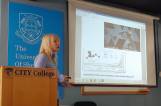
The English Studies Department Contemplates the Relationship of Technoscience and Art
The English Studies Department in addition to its interests in Linguistics, Teaching, Translation and Literature also acknowledges the value of culture. While we are aware of the technological and scientific developments and applications that make our daily lives easier, better and have aided humans in understanding and insight as well as the aesthetics of art that motivate meaningful musings, we may not be fully aware of the interrelationship of these three areas. Dr. Lia Yoka’s seminar titled: Technoscience, Art and Theories of Contemporary Culture provides an overview of the relationship between technoscience and art whilst delineating their main characteristics spanning from the 20th to the 21st century. It might be difficult to see or acknowledge how technoscience inspired works of art and granted them with aesthetic value in addition to communicating messages and critiques through such works. Dr. Yoka points out that art and science are related conceptual categories in which technology intervened in the 20th century and actually posed as the basis for their interrelationship. Science was used as an instrument via which artists then criticized science itself – note Salvador Dali’s painting containing the DNA double helix. Following this influence, however, was that of the impact industrialization, machines and computers thus venturing in the Art of the Machine. Even though technoscience was initially viewed as something negative and capable of dehumanizing – given military applications and the repercussions of two World Wars, during the mid-20th century, machine and computer art theorized the machine and employed machines to produce aesthetic results where the focus was not so much on the machine itself but the cognitive techniques employed. Examples include Jean Tinguely, Charles Csuri, Harold Cohen Aaron (computer art/algorithmic art/generative art), Robert Smithson (land art), Buckminster Fuller (human population growth animated map, 1965) and John McHale – (Pop art). Examples such as Gustav Metzger even introduced the notion of protest art thus demonstrating that critique was still evident alongside matters of aesthetics. Following this time period, Dr. Yoka notes that the 1980s poses as the revival for computers and bioart where Bioart as a notion is understood as both a process and imagery able to exact inquiry of meaning and critique art as well as technology. In fact all art could be seen as bioart because art cannot be seen as disconnected from the various processes that make up life. Artists are now interested in doing science as art is not considered enough. Examples drawn on include Joe Davis (Microvenus 2000), Eduardo Kac (“glowing” rabbit), Daniel Lee (hybrid visualization), Suzanne Anker and introduce concepts such as the flesh machine and tissue culture. Biological and IT data were now viewed with regard to aesthetics thus motivating one to contemplate on the nature of aesthetics from an alternate perspective. Of course this leads us to the present and how technoscience and art are viewed now. Focus, as Dr. Yoka explains, falls in areas of biopolitics, conceptual limitations and the need for artists to provide ideas and purpose. There is evident self-critique of both art, science as well as their interrelationship regarding their practices and ideologies. More importantly, matters such as bio-ethics and environmentally and socially conscious projects raise questions towards notions such as boundaries, ethics, intellectual property/copyright as well as aesthetics and value. Overall, a seminar of this nature motivates one to contemplate how areas considered distinct can actually influence each other, enable each other to develop but also how their interrelationships, concepts and themes raise questions regarding definitions, limitations, ideologies from different perspectives and how that contributes to and shapes the culture we live in.
12/04/2019
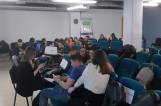
Joint classes for our business students from Sofia and Thessaloniki at our main campus
Our undergraduate business students from Sofia and Thessaloniki had the opportunity to meet at our main campus to attend joint classes of the Digital Transformation Unit, led by Dr Tasos Diamantidis, Lecturer at our Business Department. Our students worked together on the Case Studies in Digital Transformation, an activity they found particularly interesting while at the same time enjoyed meeting and attending classes with fellow-students from a different city. Our student from Sofia, Aleksandra Ivanova Kutsidimova, commented: “The content of the unit was really interesting, engaging and related to contemporary topics. I am very happy I had the chance to be involved in this course, where we had the opportunity to discuss the issues and the benefits which derive from these changes that occur in the technological and business world. I would also like to emphasise that the presentations of all three lecturers involved and the way of communication with the students were highly professional and intriguing. It was a pleasure to be a part of this weekend spent at the main campus of CITY College.” Additionally, Miftari Dafina, 2nd level student from Thessaloniki commented: "The exciting three-day workshop on Digital Transformation delivered by Dr. A. Diamantidis, Dr. A. Alexiou, and Dr. A. Solomon critically analyzed the rapid pace and magnitude for which technological innovations are reshaping business models and transforming traditional consumer behaviour. The workshop, through various miniature case studies and activities, cultivated a positive infrastructure for an interactive and thought-provoking discussion with students from diverse areas of interest and knowledge backgrounds. Overall, the session(s) produced a positive and inspiring response from participants and enhanced our views on the impact of digitalization and its potential opportunities in the new globalized environment." Another student, Antigoni Varvarezou from Thessaloniki also said: " First of all, Digital Transformation (DX) is, in my opinion, a crucial module because the world ischanging. The introduction given by Dr. Diamantidis was quite enlightening. At the end we had to deliver a project in groups, in order to better understand the applications of DX. Overall, the joint classes were a great experience. We spent many hours with each other and thatexperience brought us closer like colleagues. Most of all we realised the importance of Digital tranformation and its’ application everywhere around us." Dr Diamantidis took the opportunity to take a selfie with the students.
12/04/2019
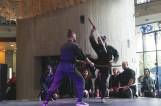
Last session for Ninjutsu Club for academic year 2018-19
Students of the Ninjutsu Club of CITY College International Faculty enjoyed their last session for this academic year with their Ninjutsu instructor, Mr Panagiotis Ntailakis, practicing moves and tactics of the martial art.
12/04/2019
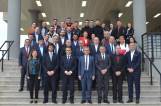
SEERC research associate attends round table discussion on university-industry collaboration in Kosovo
Besart Hajrizi, research associate of the research centre of CITY College, the South East European Research Center (SEERC) and PhD candidate of the University of Sheffield attended to a round table discussion organised by the University of Mitrovica in Kosovo on 5th of April 2019. The round table discussion was organised by the Faculty of Economics where representatives from the government, university and business representatives discussed the role the relevance of higher education institutions towards the intensification of university – industry interaction in Kosovo and beyond. Besart Hajrizi has been showing some of his research results and declared that his proposing university-industry collaboration framework and conceptual frameworks for each stakeholder levels are going to facilitate significantly the interaction between these two key actors. Many speakers commented positively and were considering the framework as a promising tool for the South East European countries, and Kosovo specifically. Therefore, such a study which is proposing a dynamic framework on university-industry collaboration conducted by SEERC's researcher is considered as a mechanism which significantly impacts on the unemployment rate and economic development of a transitional economy, such as Kosovo.
12/04/2019
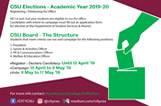
CSU Elections 2019-20
For more info contact: tkyriakou@citycollege.sheffield.eu
10/04/2019
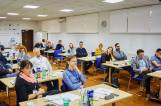
Launch of the third Programme for Management Development for EBA members in Kyiv
The third season of the Programme for Management Development of European Business Association was successfully launched on March 30 in Kyiv. The first unit on "Brain Adaptive Leadership" was delivered by Prof. Alexandros Psychogios, Professor of International HRM, Birmingham City University (UK), and visiting Lecturer at the Executive MBA programme of CITY College, International Faculty of the University of Sheffield. Prof. Psychogios explained how managers can further develop their leadership capabilities by focusing on applied knowledge coming from brain science. The participants had the chance to get insights from some of the most important findings of Neuroscience and behavioral science, trained on simple-tounderstand and simple-to-follow method, namely the Brain Adaptive Leadership (BAL) framework. Based on brain and behavioral science, they uncovered ways to boost executives' leadership brains and prepare them in adjusting their behavior for challenging and complex business environments. It was a great start for this third Programme for Management Development that CITY College International Faculty runs for EBA members in Kyiv aiming at equipping them with skills and knowledge, which are required for meeting today’s business strategic objectives. Photo credits: European Business Association
08/04/2019
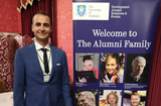
CITY College graduate among the 150 Sheffield alumni to attend the House of Lords Alumni Reception 2019 in London
Our graduate, Mr. Nikolaos Tsokanos, had the honour to be one of the 150 Sheffield alumni selected to attend the House of Lords Alumni Reception 2019 in London hosted by The Rt Hon. The Lord Blunkett and the University's newly appointed President and Vice-Chancellor, Professor Koen Lamberts. Mr Miles Stevenson, Director of Advancement also attended the event and addressed a short welcome to all Sheffield graduates. The event took place at the Cholmondeley Room & Terrace, House of Lords at the Palace of Westminster on Thursday 21 March 2019. Mr. Tsokanos also had the opportunity to attend a guided tour of the Palace's public areas prior to the reception which included access to the two House Chambers. Mr. Nikolaos Tsokanos completed his undergraduate studies at the Business Administration & Economics Department of CITY College International Faculty and today is owner and General Manager of Veterinary Wholesaler - TSOKANOS SA. Our alumnus, Mr Tsokanos, with Mr. Miles Stevenson, Director of Advancement at the University of Sheffield
08/04/2019
  70 from 163 70 from 163   |