Κολέγιο CITY College
|
News & Events

Company visit with a taste of Vergina beer and Tuvunu herbal tea for our business students
On 29th March, first year students of our Business Administration and Economics Department had the opportunity to go on a trip to Komotini and get a taste of Vergina beer and Tuvunu herbal tea during an exciting company visit. The students were hosted by the CEO Mr Dimitri Chriss and by the Tuvunu Marketing Department. Accompanied by Ms Aggeliki Papakonstantinou, Senior Lecturer at the Business Department and Mr. Vassilis Tsoulis, Director of the Career, Enterprise and Employability Centre of CITY College International Faculty the students were given a site tour at the Macedonian Thrace Brewery S.A in Komotini’s Industrial Area. During the company visit they had the opportunity to taste Vergina beer and Tuvunu herbal tea, both very popular products. Macedonian Thrace Brewery S.A. was established in 1996 at Komotini's Industrial Area. On February 13th, 1998 it produced the first 100% Greek beer. That’s when the very first “Vergina” was bottled. Tuvunu was established in 2012, introducing the world to a new class of natural soft drinks that are good for consumers, producers and the local economy. Company visits are a vitally important part of the student experience at CITY College International Faculty. Aiming at brigning students closer to the industry the Career, Employability and Enterprise Centre of CITY College organises frequent company visits giving to students the opportunity to widen their horizons, get exposed to real business world, contemporary business practices and enhance the theoretical practice. The intention of company visits is also to better prepare students enter the workforce.
04/04/2019
The English Studies Department Delves into the Fundamentals of Fiction
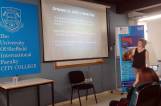
The English Studies Department focuses on an array of areas such as linguistics, teaching, translation as well as literature. Therefore, it comes as no surprise that our students would want more exposure and insight. Dr. Cathy Marazi delivered the seminar Fiction 101: Knowing and Understanding the Basics on 2nd April with the following two aims: raise awareness towards the fundamentals of fiction and consider them from an analytic/interpretive perspective as well as a creative writing one. We all experience fiction in one form or another on a daily basis and each of us has his/her personal preferences. Some enjoying reading a good novel, others like the weekly routine of viewing the latest episode of their favorite TV series and others anxiously await the release of a particular film they’ve been waiting months for. In all cases, we experience a Fiction: a thing made, shaped, molded, formed, designed or feigned. As readers or viewers we may be aware to certain degree or unaware of various components that assist in creating the story we are experiencing. The plot – how the story is told – is one basic feature. To tell a story chronologically would be to recount what one did yesterday. To use flashforwards or flashbacks, to begin narration in media res or to delay and digress the sequence of events can make a story engaging, complex or simply alluring. That being said, watch out for plot-holes or lack of consistent and logically causality in the sequence of events. Of course, any story would be incomplete without characters whether life-like, mythical or magical. One may find flat characters a bit static and good to experience every so often but the round, dynamic characters are the ones we may manage to identify with, the ones that may attract us or make us think more about a topic or issue. Even if we don’t have a favorite character – one that we identify with – we can say with much more ease if we have a character we despise. Characters and plot sequences also require a setting: a physical location (interior or exterior), in a geographical location or fantastic place complete with sociocultural features. The setting though perceived by many as the backdrop can actually mirror, mold and shape its characters. It can reveal information about them, challenge them, affect them or even act as an actual character itself. All this appears relatively simple so far but not if we begin to contemplate the interrelationship of the aforementioned items and many more. Narrator in written types of fiction has always been considered challenging and complicated, knowing who speaks, from what perspective and whether or not they can be trusted or if they are reliable in the information they are divulging. Matters can become even more complicated with figurative language like irony in addition to other types (e.g. metaphor, symbolism). Not to mention the matter of genre – the type of story we are experiencing. Though useful for matters of categorization and what to expect from a story, creators often combine genres (hybrids) or even subvert them thus reversing our expectations and offering a critique through a different perspective. Though one seminar cannot touch upon all aspects of fiction it can unveil the necessity of exposure to different types and kinds of fiction whether one wants to analyse and interpret fiction or produce one’s own fiction. Who would ever consider Shakespeare and Hip Hop together? And yet, exposure and experience can spark ideas, help create connections and association between types of fiction as well as provide insight to strategies, techniques and styles of writing of renowned authors we continue to read even today.
04/04/2019
Guest lecture by the CEO of Coca Cola in Serbia for our Executive MBA students
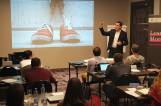
Our Executive MBA students in Serbia had the opportunity to attend an insightful 'Meet the CEO' guest lecture by the CEO of Coca Cola in Serbia, Mr. Svetoslav Atanasov. The guest lecture took place in the contect of the 'Leading and Managing People MBA' unit in Belgrade on Friday, 22 March 2019. Students enjoyed the presentation and the discussion that followed on Leadership with the participation of the unit leader Prof. Alexandros Psychoghios. The ‘Meet the CEO’ lecture series has been established by our Executive MBA programme to allow students to get a glimpse into the minds of successful entrepreneurs and business leaders and encounter their ideas and insights about business.
03/04/2019
The English Studies Department Attends the Panhellenic Forensics Association Tournament
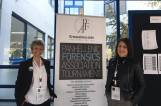
The English Studies Department of CITY College International Faculty of the University of Sheffield, is proud to have taken part in the Panhellenic Forensics Association Tournament, 28th-31st March, 2019, this year hosted by Mandoulides Junior and Senior High Schools in Thermi, Thessaloniki. The 4-day tournament consists of varied activities that students from different schools and cities in Greece take part in. These activities include: Debate, Impromptu Speaking, Oral Interpretation of Literature, Oratory, Group Discussion, and Duet Acting. Dr. Cathy Marazi, Dr. Vicky Papachristou and Dr. Kelly Pasmatzi, Lecturers at the English Studies Department, attended this year’s tournament acting as judges for various events offering their professional expertise. The tournament proved to be a creative and productive experience for all contestants, allowing them to practice and exhibit both their knowledge of the English language as well as their ability to apply it to varied and different activities and contexts. Congratulations to the organisers and judges and extra congratulations to the students who participated!
03/04/2019
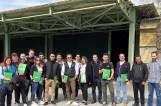
Company visit to ASEPOP Velnentou in Kozani
An interesting company visit to Asepop Velventou was organized for the second year business students of CITY College International Faculty. Our students had the opportunity to get first-hand insight into the operations of ASEPOP Velventou, the first cooperative in Greece to introduce product branding. Members of the cooperative produce peaches, nectarines, apples, kiwi fruit, prunes, nashi pears, quinces, apricots and cherries, and their total production exceeds 14,000 tons. Its products are sold all over Greece and also exported to Central and Eastern European countries, with Russia being its main market.
27/03/2019
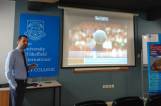
The English Studies Department gains Tips and Tricks for Improved Public Speaking
We all dread speaking in public. And in some cases, if we’re “lucky” we might actually avoid having to speak in public. What happens though, when speaking and presenting is part of a piece of coursework, or takes place in the context of a conference or is required of us in our profession? The English Studies Department sought to provide its students and the general public with even more tips and techniques through its Personal and Professional Seminar series. ELT Consultant of Express Publishing, Mr Iraklis Velissaridis, provides some vital points, tips and techniques that can prove useful in most contexts with his seminar that took place Tuesday, 26th March, titled: “Public Speaking”. Mr. Iraklis Velisaridis delivered an engaging, humorous and informative presentation on the usefulness of and the necessity of public speaking. We undertake opportunities of public speaking to communicate, persuade and/or present. As Mr. Velissaridis points out, it is necessary to always remember why we are speaking or presenting as the purpose will certainly assist in managing both the content and the mode of delivery. Public speaking contains a set of skills that can be applicable across a range of contexts such as: professional meetings, teaching/learning environments, public relations, seminars/conferences and even family gatherings. Imagine how being more public speaker savvy could enable one to give a memorable toast at a family gathering, conference dinner or even at an awards ceremony should one be called upon to do so. Speaking in public though is considered to be one of the top-most fears people have. “I’d rather die, than speak in public” is a phrase often heard. The truth is that we never get over the fear or anxiety 100% but we do find ways to manage and deal with it more effectively and successfully. Preparation is key as is rehearsing. Mr. Velissaridis advises towards knowing our audience, being capable of adapting and adjusting our style, being engaging/lively and having fun – enjoying ourselves – in the process. Mr Velissaridis provided an array of examples of public speaking, ranging from very young children – others shy, others sassy – to individuals ranging in fields and contexts such as Steve Jobs, Al Gore and Margaret Thatcher. Mr Velissaridis even included two clips of an individual to exemplify the Do’s and Don’ts: in the first instance the speaker delivered a presentation that complies with all the Don’ts while in the video that followed the speaker adopts all the Do’s resulting in a highly more engaging and successful presentation. All in all, though we strive to become competent speakers and simply get over the fear of public speaking, what we should perhaps consider instead is becoming memorable speakers. To achieve this, in addition to knowing the topic/subject, being tech-lit and tech-savvy, we also need to work on our delivery skills, voice and body language. We need to observe others who are good at presenting and we need to practice at becoming better at if through preparation, rehearsal and feedback if we want to not simply overcome the fear but more importantly become effective and memorable public speakers.
27/03/2019

Dr Pavlidis speaks about anti-doping to Apollon Kalamarias basketball team
Dr Giorgos Pavlidis, lecturer at our Psychology Department, delivered a seminar on anti-doping to the basketball team of Apollon Kalamarias in Thessaloniki. Being a former player of the team himself, Dr Pavlidis was more than happy to share his knowledge on anti-doping issues and give advice to the team’s basketball coaches on how to prevent doping and protect athletes. He also talked about WADA and its role in anti-doping. Photo source: mgskapollon.gr
26/03/2019
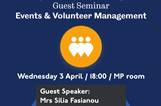
Guest Seminar on Events & Volunteer Management
26/03/2019
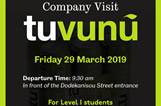
Company Visit to tuvunu by Business students
25/03/2019
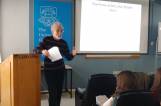
The English Studies Department Makes the Most of the Teacher’s Voice and Body Language
The English Studies Department was fortunate to host its second Personal and Professional Development Seminar on Tuesday, 19th March. Our guest speaker, Dr. Luke Prodromou, with an extensive background in drama, theatre as well as teaching (TEFL, TESOL) delivered a seminar/performance titled: Making the Most of the Teacher’s Voice and Body Language. Dr. Prodromou began his seminar by warming up the audience. With the accompaniment of reggae music he asked those attending to stand, stretch and even sing along; in other words to warm-up their voice and bodies. After that, the audience got a taste of Dr. Prodromou’s performance capabilities as he introduced himself in a variety of ways just using his voice and body language as instruments. According to Dr. Prodromou, a teacher’s voice is a vital instrument for getting and keeping students’ attention. Having a voice physically means we have to learn how to use it pedagogically. Our guest speaker drew our attention to the significance of the loudness of our voice, the variety that intonation and stress provide, the effect of pacing as well as the importance of pauses. Everything that Dr. Prodromou raised through his seminar he actually employed with his own voice and body language thus providing an educational and entertaining experience. The examples, however, do not end there. Dr. Prodromou also saw the need to initially have the audience reflect on their voice and how they use it. He called on the audience to observe and comment on other examples of voices, both audio – from an array of his own recordings – and audiovisual examples from films ranging from the golden era of Hollywood to more relatively recent ones like Dead Poets Society (1989) and Dangerous Minds (1995). Pair work and group work were not missing from this particular seminar. Challenges also included trying to successfully recite tongue-twisters, to identifying the importance and effect of pauses used by teachers in film to considering the humorous and engaging effect mimicking well-known actors/characters could even have. The final portion of the seminar focused on the importance of body language. Dr. Prodromou focused on actors portraying teachers in films and informed the audience of various studies that have been conducted examining to what extent the body language employed by these actors is actually representative of teachers or not. If anything is to be maintained from such a seminar it is that if – to quote Shakespeare – “All the world’s a stage” (As You Like It, Act II, Scene VII), then a classroom is the teacher’s stage and ought to be used to the fullest for a successful teaching/learning experience.
22/03/2019

University of Sheffield among the top 50 most international universities in the world
The University of Sheffield was recently named one of the 'most international' universities by The Times Higher Education (THE). The University of Sheffield has been ranked 42nd out of 1,200 leading universities worldwide for the second year running. The list includes universities with an outstanding international reputation, in turn helping to attract the very highest calibre of staff and students. CITY College International Faculty belongs to one of the world’s most international universities, and contributes to the university’s international community. Compiled using an institution's international student score, international staff score, international co-authorship score and international reputation metrics, the highly-regarded top 50 also includes Oxford, Cambridge and leading universities in the US and Asia. The University of Sheffield has worked hard over recent years to forge strong overseas partnerships with the world's top universities and industry, leading to opportunities for staff and student exchange, research links and inward investment in the local economy. The rankings demonstrate the University of Sheffield’s high proportion of international students and staff, its work to collaborate on research with scholars from across the world and its strong global reputation to match. These factors are included in the metrics that allow Times Higher Education to produce the most comprehensive global university rankings in the world. President and Vice-Chancellor of the University of Sheffield, Professor Koen Lamberts said: "I am delighted that the University of Sheffield has been recognised by Times Higher Education as a truly international University with a global outlook. “It’s a real source of pride that we have over 140 nationalities represented here on campus and that our city has always made clear that staff and students from around the world are welcome. Our international students and staff play an important role in expanding the University's vibrant and dynamic cultural environment, as well as make a huge contribution to academic life, knowledge and our economic growth as a nation.” The University of Sheffield has already received significant recognition for its award-winning #WeAreInternational campaign, designed to show the value of international students across the UK, both from an economic, cultural and skills perspective. Source: www.sheffield.ac.uk
22/03/2019

Karting event by the CSU
22/03/2019
  71 from 163 71 from 163   |