Κολέγιο CITY College
|
News & Events

International Faculty alumnus shortlisted at the British Council Alumni Awards
Congratulations to our alumnus and lecturer, Dr. Nikolaos Dimitriadis, who has been shortlisted for the Study UK Alumni Awards 2017-18 and is among the finalists for the Entrepreneurial Award! Dr. Dimitriadis completed his MBA and PhD studies at the University of Sheffield and he also was a lecturer at Sheffield University Management School in the UK. He frequently lectures at the Sheffield Executive MBA in East and Southern Europe and is the International Faculty's regional Director for Serbia, Montenegro and Bosnia and Herzegovina. Furthermore, he is the CEO of Trizma Neuro, a cutting-edge Customer Neuroscience company. The event is scheduled to take place on 7 March 2018 in Athens. More information about the event: www.britishcouncil.gr/en/study-uk/alumni-awards Dr. Nikolaos Dimitriadis' short CV Dr. Nikolaos Dimitriadis (MBA, PhD) has been applying neuroscience and behavioral sciences in marketing, communications, leadership and education for over a decade. He is the co-author of the book "Neuroscience for Leaders: A Brain Adaptive Leadership Approach" for Kogan Page Publishers, London, and spoke at TEDx University of Strathclyde about the urgent need for Brain-Based Communications. He is a certified Neuromarketer and an award-winning communications professional (International PR Association Award, SABRE Award by Holmes Report and other international and national awards). He lectured at the Neuromarketing Manager Certificate Program at the Hamburg Media School among top Neuromarketing experts in the world. As a Lecturer at Sheffield University Management School in the UK he was announced by MBA students as the best lecturer in the program. He has received both his PhD and his MBA from the University of Sheffield. Dr. Dimitriadis is the Faculty's Regional Director for Serbia, Montenegro and Bosnia and Herzegovina and he is frequently lecturing at the Sheffield Executive MBA in East and Southeast Europe. His opinions are often featured in business and mainstream media, most notably in INC.COM. As a consultant, trainer and management coach he has worked with companies and institutions such as IKEA, IBM, Nestle, Molson Coors, Johnson & Johnson, Banca Intesa Sanpaolo, Holcim, Pierre Fabre, Coca Cola, Raiffeisen Bank, Plaza Centers, Rauch, Teekanne, USAID, GIZ, Merrill Lynch, UK Embassies in the SEE region, Opportunity Bank and others. He is a mentor of startups at the ICT HUB, Belgrade, Serbia. He is currently the CEO of Trizma Neuro, a cutting-edge Customer Neuroscience company. He is a passionate supporter of brain-friendly communications, holistic research, constant brand innovation and of a results-driven, human-based corporate culture.
12/02/2018
A new Erasmus + VET Mobility Project for "Banker" High School from Sofia, takes place at the International Faculty in Thessaloniki
22 January to 2 February 2018 "Development of Marketing Communication Skills for Sustainable Business" is the title of the new Erasmus + VET Mobility project that the University of Sheffield International Faculty CITY College is realizing as a partner host organization of Private Professional High School "Banker" from Sofia, Bulgaria. This is the fourth project with our Bulgarian partner. Its aims are increasing the quality level, innovations and internationalization, and strengthening the image of the school; improving of students’ competencies and skills, of their competitiveness and adequacy on the labor market of United Europe, bettering the possibilities for educational mobility, attitudes and skills for learning for life. There are 16 participants from PPHS “Banker” and the project totally corresponds to the philosophy of education, which is connected with usage of active methods and effective strategies – business games, solving cases, training, simulative sessions, etc. The participants are being introduced to the European practices for development and management in contemporary IMC as well as their role for successful communication in the context of modern users and media to support and advance their lifelong education and training. The practice program is being realized by means of theoretical seminars, workshops, training sessions and practice. The stress of theoretical Module I is on the use of the whole complex of IMC for achieving of overall brand management; in practical Module II each team goes through the whole process (from communication brief to media planning) and develops a plan for strategic brand communications; Module III is devoted to visiting Greek and international companies. The programme was successfully delivered by Mr Chris Liassides, Senior Lecturer at the Business Administration and Economics Department of the International Faculty. Upon successful completion of the practical training and defence of final products in front of a committee of the host-organisation, participants will be awarded a Europass Mobility Certificate, as well as a Certificate of Attendance issued by the University of Sheffield International Faculty CITY College.
07/02/2018

The University of Sheffield Days in Yerevan
The University of Sheffield International Faculty, CITY College cordially invites you to The University of Sheffield Days in Yerevan. The University of Sheffield is a Top 100 World University (26th in Europe, 82nd in the world - QS Rankings 2018). Through its International Faculty, the University delivers its prestigious Executive MBA programme in Yerevan, offering the unique opportunity to participants from Armenia to study for the top class MBA degree of the University of Sheffield in their region. Additionally, prospective students may join the University of Sheffield Bachelors and Masters programmes offered in Thessaloniki, Greece. The University of Sheffield Days in Yerevan is a 2-day event. Participants may join the 1st, the 2nd or both days. For more detailed information and registration, please see below: Full programme 1st Day: Monday, 5 March 2018 (Free entrance to all) 17.00 - 20.00 at The Marriott Hotel (Queen Erato Hall) • Open Day: Presentation of the University of Sheffield Bachelors, Masters and Executive MBA programmes Rt. Honourable Mr Levon Mkrtchyan, RA Minister of Education and Science And Her Excellency Ms Judith Margaret Farnworth, British Ambassador to Armenia will honour the event with their presence and address a short welcome at the opening of the event. Join the event and learn more about a Top 100 World University, The University of Sheffield and the study opportunities it offers: Bachelors and Masters programmes offered in the campus in Thessaloniki, Greece Executive MBA programme offered in Yerevan • Workshop: 'Meet the CEO: Journey to the top' Four CEOs of the biggest companies of Armenia explain their journey to the top. Mr. Andrey Pyatakhin, Beeline Armenia, Chief Executive Officer. Ms. Catalina Susan, Armenia Marriott Hotel Yerevan, General Manager. Victoria Aslanian, ArmAs Wines Armenia, Chief Executive Officer. Ms. Astghik Sargsyan, CEO of Alcon Armenia NOVARTIS Ophtalmic Division. Free entrance 2nd Day: Tuesday, 6 March 2018 (fee training seminar) 10.00 - 18.15 at The Marriott Hotel (Trdat II Hall) Training Seminar ‘Brain-Based techniques for leaders, linked with effective decisions and outcomes’ Mr Nick Lambridis, Head Coach of the Executive MBA programme Summary In today’s fast-paced, rapidly shifting world, leaders must adapt to changes swiftly, in order to avoid stagnation, miss an opportunity for innovation and growth, or worse, become incapacitated. Chances are that if you are a successful business person, you’ve found a formula of behaviors that work to achieve the results you want. But when the results start to alter, the old formula can’t be repeated; a new formula for success must be calculated. If the internal drivers, outcomes or environment have changed, then it’s time to adapt. In this one-day workshop, we will examine what holds you back, by sharpening your self-awareness, focus on the here-and-now, and finally understand the value of “holding back” your emotions. The NeuroLeadership program provides an introduction to the history, core concepts, organising principles and frameworks that underpin the field of neuroleadership. Led by a Professor of Neuroscience from the University of Sheffield Executive Development Institute (EDI), you will learn about neuroleadership and the broader context of the field that was created by the NeuroLeadership Institute. Download the full Seminar Overview (PDF) Mr Nick Lambridis Short Bio (PDF) Training seminar fee (2nd Day) Training Seminar Fee: 150 € Early bird registration and payment (by 15 February 2018): 130 € Fees for the University of Sheffield Executive MBA students: 100 € Fees for the simultaneous translation (upon request at the registration): 20 € Registration and payment deadline: 1 March 2018 Book your place now! Registration for the event is now open. If you are interested to participate you may register by completing and submitting the Online Registration Form (with the appropriate fees, where applicable). Day 1 - Presentation of the University of Sheffield programmes Online Application Form (Free entrance) Day 2 - Training Seminar by Mr Nikos Lambridis Step 1 Fill in the Online Registration Form. Step 2 Proceed to the payment* of the seminar fee through our Online Payment System. Day 1 & Day 2 – The University of Sheffield Days in Yerevan Step 1 Fill in the Online Registration Form. Step 2 Proceed to the payment* of the seminar fee through our Online Payment System. * Please note that unpaid registration will not be considered as a valid registration unless fully paid and confirmed. Terms of Payment 100% of the amount should be paid by the registration deadline. A photocopy of the bank transfer certificate and the online registration form should be sent by 1 March 2018 to: lshahzadeyan@citycollege.sheffield.eu Information: For more information please send an email at lshahzadeyan@citycollege.sheffield.eu
06/02/2018
Seminar on Neuropsychology by Dr Emmanouel in Skopje
24 February 2018 FREE ENTRANCE Online Participation Form View Dr Emmanouel short bio Information / Registrations: T: +389 2 3064 533 E: marija.nikovska@citycollege.sheffield.eu
05/02/2018

January ’18 visit for the Postgraduate Certificate in Learning and Teaching gets successfully completed!
The Postgraduate Certificate in Learning and Teaching (CiLT) is a programme specifically designed to meet the needs of Academic Staff in Higher Education. Last week saw the successful completion of Module 2 taught part, where a group of academics coming from all Departments of the International Faculty actively participated under the guidance and inspiring delivery of Dr Nigel Russell, Programme Director, and Dr Karen Ford, Course Tutor. More specifically, Module 2 is entitled Curriculum Design and Development and it is a crucial component of the programme, as it involves intensive discussions and activities on Learning Outcomes, Teaching Activities, as well as the preparation and presentation of Curricula in Higher Education, exposing Staff members to a plurality of models and approaches. Moreover, a Question-Time Session took place on the last day of the visit emphasising on Strategic Issues and Developments in Learning and Teaching. Crucially, this programme allows our staff to become self-reflective, as this module instils in them a culture of constant self-evaluation and reflection. It should be noted that a PG Certificate is awarded by the University of Sheffield, School of Education to participants after the successful completion of the course and its requirements, and graduates become Fellows of the Higher Education Academy. The PG Certificate in Learning and Teaching is particularly significant for the development of our Academic Staff, as it leads to their personal and professional development as lecturers, safeguarding also the process of module and curriculum design. It also ensures that our Staff is up-to-date and offers students the optimum experience in terms of efficient teaching, assessment and organisation. In its commitment to the highest academic standards and integrity, as well as staff performance, the International Faculty proudly encourages and supports its entire staff in participating in this scheme, with a view to remaining pioneers in Tertiary Education in Greece and abroad.
31/01/2018

Dr Cruz's book in Digital Marketing becomes core text by the Chartered Institute of Marketing (CIM)
Dr Ana Cruz Congratulations are in order for Dr Ana Cruz, whose latest book ‘Digital and Social Media Marketing’ has been adopted core text by the Chartered Institute of Marketing (CIM) for the new Professional Diploma in Digital Marketing. Dr Cruz is one of the co-editors and authors of the book that was produced as part of the Joint Masters in Digital and Social Media Marketing (JEMSS). The book is an industry-led, research-informed and results-driven guide to digital commerce. Its examples draw from SMEs and from Europe to offer a unique perspective for those learning about digital marketing. Dr. Ana Cruz is a multiple award winning marketer with over 15 years international experience in public, private, commercial, non-profit and environmental sectors. She lectures in Marketing Communications and Brand Strategy and teaches at International Faculty since 2010 in the Executive MBA, undergraduate and postgraduate programmes. Dr Cruz’s contribution to the field of marketing and branding has been recognised with over 7 marketing awards in the UK. The International Faculty warmly congratulates Dr Ana Cruz on her book’s success. ‘Digital and Social Media Marketing: A Results-Driven Approach’ by Dr Ana Cruz
16/01/2018
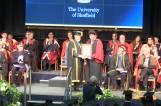
Prof. Kefalas receives Senate Award at the Graduation Ceremony of the University of Sheffield
Warm congratulations are in order for Professor Petros Kefalas, Vice-Principal for Teaching & Learning at the International Faculty, who received the Senate Award for Leadership in Learning and Teaching at the University of Sheffield Graduation Ceremony that took place 10 January 2017 in Sheffield, UK. Prof. Kefalas was honoured with this award that came as recognition of his exceptional work and commitment and values through his 25 years of service at the International Faculty CITY College, as well as, his unparalleled ability to lead and inspire all staff towards achieving excellence in learning and teaching. The citation read out at the Graduation Ceremony for Prof. Kefalas mentioned: “It is a great pleasure to introduce someone who has a great passion for teaching and is described as an exceptional colleague and inspirational leader who has actively and innovatively promoted the learning and teaching agenda for higher education in Greece and the South East European region as Vice-Principal and Faculty Director for Learning and Teaching in the University of Sheffield’s International Faculty, based in CITY College, Thessaloniki.” Professor Petros Kefalas Vice-Principal for Teaching & Learning at the International Faculty CITY College During his speech at the ceremony, the Vice Chancellor of the University of Sheffield Professor Sir Keith Burnett talked with great pride about the University’s International Faculty: “It is a particular pleasure of me to give degrees to people from Thessaloniki, from our International Faculty CITY College. Because actually, I’ve been there, I’ve met alums in Greece and around the region and I know what an extraordinary reputation that place has, both as a place of teaching that you’ve inspired (i.e. Prof. Kefalas), but also as a place where people of very high quality go into service, both whether it is in business, administration or governments across the region. So we are very very proud of the people in Thessaloniki.” It is worth mentioning that the University of Sheffield awards only one Senate Award for Leadership in Learning and Teaching each year. The Senate Awards Scheme particularly rewards staff members of the University of Sheffield who demonstrate an exceptional contribution in the area of learning and teaching and thus support and enhance the student learning experience. Senate Award recipients become a “Senate Fellow” for life. The International Faculty CITY College, takes pride in Prof. Kefalas’ exceptional achievement and wishes him best success in his future endeavours.
11/01/2018

Second publication by Dr Papamalis from the Council of Europe on drug control policies
Dr Fivos Papamalis, Part-time Lecturer at our Psychology Department, research consultant to the Pompidou Group of the Council of Europe and member of the EU expert group on Possible adverse effects and associated cost of drug control policies, contributed on the development of the second publication of the group focusing on Costs and Unintended consequences of drug control policies. More specifically, Dr Papamalis initially on behalf of the Council examined the current state of the art of the effects and associated costs of drug control policies to individuals, this involved reviewed the evidence base and conducted a thorough literature review on the effects of drug control policies to the individuals and the society; conducted policy analysis and explored methodologies on estimating drug public expenditures and developed policy recommendations; drafted a narrative report and successfully coordinated discussions and negotiations among the expert group and policy makers. In the second research phase as a research consultant to the Norwegian Ministry of Health and Care Services and the Institute of Public Health, Dr Papamalis conducted research on the unintended consequences of EU drug control policies, including Health, Social and Economic functioning, Safety and Public order and Criminal justice, examined relevant databases such as the EUROSTAT, UN-CTS (Crime and Criminal Justice Statistics), SPACE, European Sourcebook on Crime and Criminal Justice Statistics OECD and provided an estimation methodology based on modelling and integrative data collection from the EU databases. The output of this study was the development of the Chapter 3 of this publication and in collaboration with the expert group the development of a comprehensive policy report that was reviewed by the permanent correspondents of the EU member states earlier this year. Summary of the Report Estimation or full costing of drug-related public investment including both direct expenditure and also indirect costs and impact on public resources should therefore be a key objective of any evaluation. Report by the expert group on possible adverse effects and associated costs of drug control policies. Evaluation is an integral part of a good governance approach to public policy. This principle applies equally to the component of drug policy designed to counter the availability of and access to illicit drugs. Estimation or full costing of drug-related public investment – including both direct expenditure and also indirect costs and impact on public resources – should therefore be a key objective of any evaluation. To evaluate and improve drug policy, it is imperative to know and take note of all possible effects of different interventions and actions. All policies, regardless of purpose or intention, come with a risk of unintended consequences. Public expenditure estimates can be used as a tool for assessing whether the expected or desired results of the policy in question are actually reflected in action, and they constitute a necessary tool for implementing thorough policy evaluations. Public expenditure studies should mirror all relevant activities and policy approaches and may be particularly appropriate in times of austerity. Accurate estimates of public spending will help policymakers plan relevant interventions and allocate necessary funds to authorities in charge of specific aspects of the policy’s implementation. A thorough assessment of drug policy expenditures will also contribute to improved transparency and accountability of public institutions. This publication brings together the findings of wider study conducted by the Pompidou Group in cooperation with the EMCDDA seeking to identify the unintended effects and associated costs of drug control policies. The aim of this publication is threefold. First, increase international awareness about the importance of estimating public expenditure on supply reduction initiatives. Second, stress the importance of harmonizing definitions and increasing availability, comparability and reliability of data as well as methods for sound estimates. Third, contribute to developing sound estimation practices to obtain accurate, complete and reliable drug policy evaluations.
10/01/2018
Dr Papamalis contributes research publication on drug control policies to the Joint Report of the EMCDDA
Dr Fivos Papamalis, Part-time Lecturer at our Psychology Department, recently co-authored a joint EU publication on Public Expenditure on Supply Reduction Policies that was published by the Joint Report of the EMCDDA – Pompidou Group of the Council of Europe. Mr Papamalis has served as a member of an expert group engaged by the Pompidou Group of the Council of Europe for the project ‘Possible adverse effects and associated cost of drug control policies’. In 2015, Mr Papamalis had an individual contract with the Council in order to examine the current state of the art of the effects and associated costs of drug control policies to individuals. Subsequently, was also hired as scientific consultant by the Norwegian Ministry of Health to undertake written tasks in support of the work of the Expert Group. Among other things he contributed to (i) developing the tables of the unintended consequences of drug control policies, including Health, Social and economic functioning, Safety and public order and Criminal justice and (ii) writing the main chapter on the Unintended Consequences of drug control policies including scientific literature, fully referenced. Due to his scientific background and technical skills, he also signed a contract with the Norwegian Institute of Public Health, Norway, in 2016, to further support the work of the Expert Group where he successfully developed a comprehensive narrative report of the associated harms of drug control policies and on the evidence based harm reduction interventions. During his tenure, Mr Papamalis also examined the available EU databases on the drug control public expenditures, in order the propose strategies for estimating different components of drug-related public expenditure across the EU and to facilitate the transition towards an evidence based resource relocation. This Joint EMCDDA-Pompidou Group Report is part of the work conducted by the Expert Group on “Possible adverse effects and associated cost of drug control policies”. The final report will come out in December, following permanent correspondents’ consultations.
10/01/2018
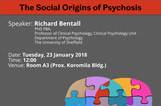
Guest Lecture on the Origins of Psychosis
Information T: +30 2310 224421 E: gvasileiadou@citycollege.sheffield.eu Abstract It has commonly been assumed that the psychotic disorders (conditions that involve hallucinations and delusions, and which usually lead to diagnoses such as ‘schizophrenia’ or ‘bipolar disorder’) are largely genetic in origin. This assumption is usually justified by referring to heritability estimates that exceed 80%. However, these estimates are not measures of causation and their misinterpretation is an example of one of the most common mistakes in statistics – assuming that correlation proves causality. In fact, major environmental influences are possible even if heritability approaches 100%. The only way of assessing these influences is to look for them. In recent years, considerable evidence had accumulated on a range of environmental risk factors for psychosis, including urban environments, poverty, migration and trauma. In each of these cases, the effects are particularly strong when these exposures occur in childhood. The guest lecture will focus particularly on the effects of childhood trauma which, in a meta-analysis, raises the risk of adult psychosis by a factor of 3. In three epidemiological datasets, specific patterns of association were found, with childhood sexual abuse being a particular risk factor for hallucinations and disruption of attachment bonds a particular risk factor for paranoid beliefs. These findings point to psychological mechanisms that explain these associations: dissociative states in the case of hallucinations and insecure attachment styles in the case of paranoia. Implications for the treatment and prevention of severe mental illness will be discussed.
10/01/2018

Prof. Ketikidis invited at the Judging Committee member at the Education Business Awards 2018
For a second consecutive year, Prof. Panayiotis Ketikidis, has been invited to be among the members of the Judging Committee of the Education Business Awards 2018. The event aims at rewarding Educational Organizations and institutions that systematically invest and innovate human resources of Greece to provide to society with all the knowledge, skills and talents that may lead to innovation and progress. Ex Minister of Education in Greece, Former European Commissioner for Employment, Social Affairs and Equal Opportunities and President of President of the Network for Reform in Greece and Europe, Ms Anna Diamantopoulou, will be the President of the Judging Committee, that comprises many distinguished individuals, mainly from the sector of education. More about the event: www.educationbusinessawards.gr
09/01/2018

Our English Studies Dept. is eagerly welcoming the Christmas festivities!
It’s looking a lot like Christmas at the English Studies Dept. of the University of Sheffield International Faculty! In a joyful and festive atmosphere, our students and Faculty staff gathered around the tree and brought it to life with its decorations and its sparkling colorful lights. The ‘magic’ began on the second floor of the Prox. Koromila building, where our tree proudly stands, and moved on to a meeting room where Christmas songs, Santa hats and handicrafts set the scene! Our students and staff made sure that this celebration be warm and beautiful by lavishing our Christmas table with a plethora of pastries, traditional pitas, piroshkies and home-made cakes! Surprises were not missing from the get-together event as a few lucky of us got to win wonderful Christmassy presents in a gift auction that our members of staff had secretly organised. The English Studies Department would like to extend its sincere and warmest wishes to everybody and wish you all a wonderful Christmas holiday and a Happy New Year!
22/12/2017
  91 from 163 91 from 163   |