Κολέγιο CITY College
|
News
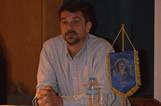
Mr Pavlidis participates as speaker in the 18th National Conference of the Sport Educators Association of N. Greece
Mr George Pavlidis, Lecturer at our Psychology Department, PhD Candidate in of Gerontology at our research centre, SEERC, and former professional basketball player with international career, participated as speaker in the 18th National Conference of the Sport Educators Association of Northern Greece where he delivered a particularly insightful presentation. The event took place 9 December 2017 in Thessaloniki. In his speech entitled “Successful Psychosocial Development of High Performance Athletes” he explored the differential development that high performance athletes face, extending from younger age till retirement from sports, which may produce deficits that hinders their adjustment to their post-competition life. Mr. Pavlidis outlined several suggestions on how high performance athletes can engage in behaviours that will help their psychosocial development, and how they can be supported in these efforts by their trainers, parents, sport clubs, and federations. Mr Pavlidis is a graduate of the International Faculty of the University of Sheffield, CITY College. Prior to his studies, he was a professional basketball player for 13 years in Germany, Greece and Spain. In the past, he has been the president of the Hellenic Professional Basketball Players Association.
15/12/2017

The Psychology Department announces official partners for the MA in Clinical Neuropsychology
The Psychology Department of the International Faculty CITY College is happy to announce that the Outpatient Unit for Memory, Dementia and other Related Disorders of the Neurology Department of Papageorgiou General Hospital in Efkarpia, Thessaloniki and the Rehabilitation Center 'Anagennisi' are official partners for the MA in Clinical Neuropsychology programme. Greek-speaking students trained in the diagnosis and rehabilitation of patients with brain-damage will have the opportunity to conduct their clinical practice in the above institutions under the supervision of qualified Faculty and professionals. Clinical Neuropsychology is a fast developing field, which has much to offer to patients suffering from brain-damage or neurological conditions. This unique partnership between an academic institution offering one of the very few master degrees in Clinical Neuropsychology in Greece, and two well-established and important health institutions in Thessaloniki will contribute towards the progress of Clinical Neuropsychology in Greece, and to the development of a better health service for neurological patients. These official partnerships are a great asset for the MA in Clinical Neuropsychology.
15/12/2017
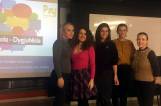
Event on Bilingualism by the Psychology Department
On 8 December 2017 the Psychology Department of the International Faculty successfully organised a public engagement event on bilingualism together with NGO ‘ZOI’ – JETA and more generally, the members of the Albanian-Greek community in Thessaloniki and Northern Greece. The Head of the Psychology Department, Professor Ana Vivas and Dr Elisavet Chrysochoou, lecturer at the Psychology Department, both coordinators of the Bilingualism research group at the Psychology Department, were the speakers of the event and discussed with the public their research findings on the effects of bilingualism on a person’s life (at the cognitive, emotional and health levels), as well as the impact that relevant research can have for policy making in the education and health domains. Special thanks The Psychology Department of the University of Sheffield International Faculty, CITY College would like to especially thank NGO “ZOI” – “JETA” for supporting the organisation of the event and for participating in the bilingualism studies conducted at the department. Their participation has been crucial to the research, and thus it was important to communicate the findings back to the community.
11/12/2017
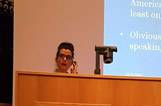
Professor Ana Vivas teaches psychology students in Sheffield
The Head of the Psychology Department of the International Faculty CITY College, Professor Ana Vivas, was invited to the University of Sheffield, UK to teach first year psychology students, as part of the module ‘Research at The University of Sheffield’. Prof. Vivas presented the research on Bilingualism conducted at the International Faculty Psychology Department. During her visit to our brother Psychology Department in Sheffield, Professor Vivas also discussed with colleagues at Sheffield about ongoing research collaborations between the two departments.
21/11/2017
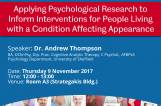
Guest Lecture with Dr Andrew Thompson from the University of Sheffield
07/11/2017
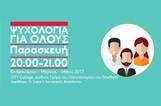
'Psychology for All' open seminar series (November - December 2017, February 2018)
The following events are going to take place in Greek. FREE ENTRANCE Online Participation Form Information / Registrations: T: 2310 224 421 E: acadreg@citycollege.sheffield.eu Δείτε online προηγούμενες ομιλίες (VIDEO):
07/11/2017
Multiplier event of the HelpCare project hosted by SEERC
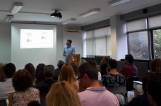
On August the 23rd, 2017, the National Multiplier Event of the HelpCare project was held in the premises of the International Faculty of the University of Sheffield, CITY College. The HelpCare project is an Erasmus+ funded project that the Faculty’s research centre, the South East European Research Centre (SEERC) joined as a research partner in 2016. The main objective was to identify the training needs and the condition that can lead to the “professionalization” of long term care, namely the delivery of care in high quality from formal or informal caregivers. Mr Pavlidis, Lecturer at the Psychology Department of the International Faculty of the University of Sheffield, CITY College, and researcher in SEERC, presented to 30 commissioners of care deriving from various parts of Greece the research findings of the project, as well as analyzed the use of several guides and tools that were developed to train formal and informal caregivers in providing care effectively and with more confidence. Mr Pavlidis stated:“This event was an excellent opportunity to present the findings and the outputs of the HelpCare project, as well as to receive feedback, comments, and valuable insight for the challenges that care providers face in their efforts to provide care in high quality in Greece. The event produced interesting discussion and strengthened a network that is committed to the delivery of care in professional standards.”
02/09/2017

Academic Posts in Psychology
- Educational or Developmental Psychology - Clinical Neuropsychology Candidates must have a Ph.D. either in Educational Psychology, Developmental Psychology and Clinical Neuropsychology or a closely related field. Candidates with relevant Masters and training and professional practice in Clinical Neuropsychology, and experience in teaching will also be considered. Responsibilities include teaching undergraduate and postgraduate courses in English. About us The International Faculty of the University of Sheffield CITY College central campus is located in Thessaloniki, Greece. It offers the University of Sheffield undergraduate and postgraduate programmes in the fields of Business Studies, Computer Science, Psychology, and English Studies in Greece and South East and Eastern Europe. More about us Closing date for applications: 11. 10. 2017 Τhe International Faculty CITY College is an equal opportunity employer. Candidates should send their CVs in English to the Head of the Department Dr Ana Vivas (vivas@citycollege.sheffield.eu) by Monday, September 11, 2017.
29/08/2017
Mr Pavlidis and students of the Psychology Department participate in the Health Plus Care Conference in London
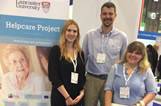
Mr George Pavlidis, Lecturer at the Psychology Department of the International Faculty of the University of Sheffield, CITY College, and researcher at the Faculty’s research centre, the South East European Research Centre (SEERC), along with Ms Papaioannou Georgia, student at the MA in Clinical Neuropsychology, and Ms Lina Tzani, alumna of the BSc (Hons) in Psychology programme, participated in the Health Plus Care Conference that this year took place in London, UK, on 27-29 June, 2017. The Health Plus Care Conference is the largest integrated health and social care event in Europe, which Mr Pavlidis and his team joined to assisted in the dissemination efforts of the HelpCare project findings. HelpCare is an Erasmus+ funded project that SEERC joined as a research partner. Both students represented SEERC and the International Faculty of the University of Sheffield excellently, contributing significantly in the work schedule of the HealthCare project in this event, receiving compliments by the whole HelpCare team. Mr. Pavlidis commented “This was an excellent teaching and learning opportunity delivered in a real setting for our students. Georgia and Lina had the chance to witness how a European funded research project operates and how a dissemination strategy is set and executed. I enjoyed working with both and I am looking forward to creating similar opportunities for the Faculty’s students in the future that have a vivid interest in research.” For more information about the Helpcare project, visit the project’s website (www.helpcare-project.org). The project can be found also in Facebook.
07/07/2017
Groundbreaking research on Bilingualism by our Psychology Department
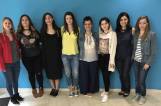
The Bilingualism Group at the Psychology Department of the University of Sheffield International Faculty, CITY College, led by Dr Lisa Chrysochoou and Professor Ana B. Vivas conducts groundbreaking research on the so called bilingual advantage, and other neuro-cognitive and language aspects of bilingualism. From left to right, Anja Redzic (UG student), Anna Maria Arandjelovic (UG student), Likane Cana (UG student), Aleksandra Laketa (PhD candidate), Prof. Ana Vivas, Arvesa Studenica (PhD candidate), Dr Lisa Chrysochoou, Dr Aristea Ladas This research line started with the collaboration of Professor Vivas with Dr Albert Costa from the University of Pompeu Fabra in Barcelona (Spain) with Catalan-Spanish bilinguals, and continued with a SEERC PhD thesis by Dr Aristea Ladas (co-supervised by Professor Vivas and Professor Michael Siegal and Dr Dan Caroll at Sheffield), which examined Greek-Albanian bilinguals across the life span. Dr Chrysochoou was also involved in large-scale National funded project leaded by Aristotle University to investigate Greek-Albanian bilingual children. This line of research has also been funded by the COEUS summer internship scheme, awarded to Dr Chrysochoou, Professor Vivas and Dr YangJing Wu from the University of Sheffield and to our postgraduate student in Cognitive Neuropsychology, Vasiliki Salvari, to study brain function using EEG in Greek-Albanian bilinguals. The research of the Psychology Department so far has challenged previous findings of bilingual people outperforming monolingual people in cognitive skills (memory, attention, cognitive flexibility). The Bilingualism Group recruited data from over 350 participants, 161 Greek-Albanian bilinguals (and matched, on socio-status, general intelligence, age and gender, Greek monolinguals), ranging in age from 5 to 90 years old, and 27 simultaneous French-Greek bilinguals, and examined both cognitive performance using behavioural tasks, and brain function using EEG. Currently, researchers from our Psychology Department are collecting data from other linguistic bilingual populations in South East Europe in the framework of two SEERC PhD studentships, Aleksandra Laketa and Arvesa Studenica, in collaboration with Dr Emma Blakely (at Sheffield), and several undergraduate and post-graduate research projects. The Psychology Department is also collaborating with Dr Patsala, from the English Studies Department, to study second language learners of English among our multi-linguistic student body. Research findings are of crucial importance, since understanding the impact of bilingualism on cognition across the life span, whether bilingual children have better cognitive performance than their monolingual peers and bilingual older adults show less cognitive decline, has strong implications for policy making (e.g., inclusion of mandatory L2 learning in the school curriculum, and recommendation of L2 learning as a preventive strategy for healthy aging). About Bilingualism More than half of the worldwide population speaks at least a second language, whereas a similar number (58%) has been reported for Europeans in a recent survey conducted by the European Comission (2012). The factors contributing to the increase of bilingualism in our current society are cultural openness, migration and globalization. Given these numbers, understanding what are the advantages and disadvantages associated with learning a second language or growing up in a bilingual-multilingual context has become the focus of policy makers and researchers. For instance, the European Commission launched in 2005 A New Framework Strategy for Multilingualism to promote actions for maintaining and increasing linguistic diversity in Europe. While there are obvious socio-economic advantages associated with speaking more than one language (cultural agility, linguistic diversity, enhanced communication and better economic, educational and professional opportunities), research is not conclusive with regards to the cognitive and language specific benefits associated to bilingualism. For more information about the research on Bilingualism by our Psychology Department you may read the following: Ladas, A. I., Carroll, D. J., & Vivas, A. B. (2015). Attentional Processes in Low‐Socioeconomic Status Bilingual Children: Are They Modulated by the Amount of Bilingual Experience?. Child development, 86(2), 557-578. Vivas, A. B., Ladas, A. I., Salvari, V., & Chrysochoou, E. (2017). Revisiting the bilingual advantage in attention in low SES Greek-Albanians: does the level of bilingual experience matter? Language, Cognition and Neuroscience, 1-14. Our research will be also presented in a symposium organized by our research group at the 16th National Conference of the Hellenic Society of Psychology, in Thessaloniki (http://www.elpse2017.gr/). If you are bilingual and want to participate in the research please contact our PhD student, Ms Studenica at astudenica@citycollege.sheffield.eu
08/05/2017

A successful ‘Psychology for all’ talk on Panic Attacks
A successful ‘Psychology for all’ talk on ‘Panic Attacks: The Gestalt perspective’ took place with great success drawing a full house at the Auditorium of our main campus in Thessaloniki. The guest speaker, Ms Elisavet Parthenioti, Gestalt Foundation graduate and Counselling Trainer shed light on panic attacks, an anxiety symptom that is widespread today. Ms Parthenioti discussed the Gestalt perspective on panic attacks and explained that although panic attacks are a personal experience they can be a social problem with political and cultural roots. Through this perspective the treatment does not only focus on ‘personal empowerment and support’, but also to contemporary relational frame. The audience found the presentation particularly informative. This was the first Psychology for all event for 2017. The series features a range of psychology topics to be covered by future events throughout the spring semester. Stay tuned! Watch the talk online
14/02/2017

Our psychology students explore their personalities behind masks
Our postgraduate students had the opportunity to participate in a very powerful experiential learning activity called ‘The Masks’, during which identity-related issues were explored. The students were asked to design and create a mask for themselves that they would wear during the exercise. Students wear their masks and talk with their fellow-students about their hidden desires, thoughts and feelings. The masks exercise is highly interactive as fellow students can ask questions and discuss points raised by the student wearing the mask. The activity presents participants with the opportunity to go deeper into themselves and identify their personality issues or repressed desires. The activity proves to be quite revealing for many students and fun for everyone. Nikos Sapkaris, one of the students that participated in the activity said: "It was an interesting experience because using the masks enabled us to express and comment deeper thoughts and feelings. Hiding our faces (literally) encouraged us to reveal insights. Each student projected emotions and Dr Savvidou, helped us create an interesting story which was related to personal 'unfinished business'." The exercise takes place within the context the ‘Personal and Professional Unit’ of the MSc/MA in Counselling Psychology programmes, led by Dr Suzie Savvidou. Dr Savvidou said: “Students find these exercises very helpful in getting a deeper insight in who they are at personal and professional level, and they also become aware of aspects of themselves that they need to explore further before practicing as counsellors in the future. Also it enables us to move from theory to practice, since students can actually experience what they have been studying in their texts.” This was just one of the many experiential activities taking place in the Psychology Postgraduate Programmes, as part of the taught part. These activities are used for reflection - an approach used in applied fields to bring trainees in touch with their thinking and feeling patterns and to help them acquire self awareness, which is a critical skill in such fields.
30/01/2017
  9 from 15 9 from 15   |