Κολέγιο CITY College
|
News
The English Studies Department Acknowledges Alternative Assessment Forms
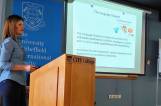
The English Studies Department of CITY College is highly aware that assessment is a great and important part of education at all levels. The second Personal and Professional Development Seminar delivered on Tuesday, 5 November, 2019 touches upon this issue. Our guest speaker, Dr Ifigenia Kofou, through her seminar titled: “Alternative Language Assessment Forms” raises our awareness towards the importance of assessment and the alternative forms it can take. When we hear assessment our minds immediately go to items like tests, exams, grades. Alternative assessment as Dr. Kofou highlights also incorporates reflection: how do we assess, why do we assess and what do we assess? Alternative types of assessment include: portfolios, journals/diaries, think-aloud protocols, project-based learning and rubrics. Given the learner-centered context that is becoming ever more prevalent in teaching/learning practices, both teachers and learners need to learn or become more aware of reflecting on practices as well as assessment in comparison to their prior or past knowledge, skills and abilities. Alternative forms of assessment can certainly assist as a continuous informal procedure that enhances cooperative learning, engages and motivates students towards active participation, teaches them life-skills and enables them to become more autonomous. Dr. Kofou in the area of portfolios placed added focus on the European Language Portfolio that consists of a Language Biography (where learners can exhibit any/all languages they know and/or are learning), a Dossier (containing student work thus demonstrating competences/achievements) and their Language Passport. In addition, journals or diaries – as they draw on actual everyday practices and are thus considered the most common type of alternative and reflective assessment – come in various types such as dialogue journals, learning journals, diaries of attitudes/feelings and can be used by both students and teachers. The Think-Aloud protocols as Dr. Kofou informs can assist students in understanding and becoming more aware of what they are learning, where they have difficulties and what these difficulties are as well as how they can solve these problems. Students essentially become more aware of how they are learning. Projects can pose as a more dynamic approach and contribute towards collaborative teaching across disciplines. As with all types of assessment so too all the aforementioned need to align with goals, Learning Outcomes, clear instructions and criteria of assessment as well as reflection for future adjustments and improvement. In other words as Dr Kofou stresses, alternative assessment does not exclude testing but actually requires the implementation of testing so as to validate alternative assessment forms and by extension prove that they are reliable. Hence, Rubrics are also a valuable component not only in informing students of what they are being assessed on and how but also to enable teachers to provide descriptive assessment and productive feedback as well as help students and themselves to engage more in reflective learning/teaching practices. By extension there are different types of rubrics such as: critical thinking, analytical, general, task-specific, etc. Overall, Dr Kofou points out that alternative assessment by being sensitive towards students’ backgrounds, skills, strengths and weaknesses allows through personalized profiles and diverse tools and practices for a richer and more varied way to assess our students but also ourselves, our strategies and our materials. Assessment reform should be, in other words, an ongoing, continuous effort.
07/11/2019
English Studies Department students go to the Thessaloniki International Film Festival
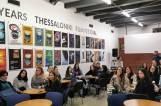
On Monday, November 4, Level 1 and Level 2 students of the English Studies Department had their session for the Introduction to Film Studies unit at the premises of the Thessaloniki International Film Festival. Following an initiative by their lecturer, Dr. Thomas Mantzaris, the students were introduced to the inner workings of the festival by the Head of the Agora department, Ms Yianna Sarri, who provided valuable insights into the industry. Students not only deepened their knowledge of the film industry by familiarizing themselves with the context and operations of the 60th Thessaloniki International Film Festival, but also managed to relate class discussions on film production, distribution, and exhibition to one of the most significant cultural events that takes place in Thessaloniki every November. Ms Yianna Sarri exposed students to the professional side of the festival, highlighting the challenges of filmmaking in the twenty-first century as well as underlining the festival’s commitment to encourage young filmmakers and bring them to the forefront. Students took advantage of this unique opportunity in order to address questions, and enhance their overall understanding of the film industry.
05/11/2019
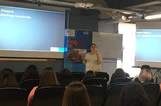
The English Studies Department Considers the Value of Adapting
1st Personal and Professional Seminar for academic year 2019-20 The English Studies Department’s first Personal and Professional Development Seminar for the 2019-2020 academic year commenced Tuesday, 22 October, 2019 with an engaging thematic area significant to teachers and learners. Our guest speaker and staff member, Ms Maria Sachpazian delivered an engaging seminar titled: “Reasons and Rationale behind materials’ adaptation in the digital age” thus bringing forward the concept of adapting in the teaching/learning context. In nature and in life, to not adapt can result in becoming obsolete to say the least! Similarly, teaching and learning with regard to methods, material, types of assessment, aims, Learning Outcomes, use of technology and more, need to adapt as the components and aspects of teaching and learning change and develop. For teachers, especially novice teachers, the idea of adapting ready-made course books and similar material can appear overwhelming or even unnecessary. And this may be the case as Ms Sachpazian highlights, so one always needs to consider the context. Initially, a teacher needs to know the course book and the material; a SWOT analysis can further help to see what is weak or missing from such material. Next, Ms Sachpazian suggests personalizing the material to ourselves as teachers but more importantly to our students. Ms. Sachpazian with Dr Marazi, lead organiser of the PPD seminars Drawing on McGrath (2016), Ms Sachpazian informs that when adapting we need to consider the 3 Es: Extemporation (on the spot-thinking/spontaneous reaction), Extension (quantitative change), Exploration (qualitative change). Of course, this is not done randomly, without rationale, aim, purpose, or considering different parameters of learning such as materials, classroom, steps/stages, time availability, learner level, the teacher’s role and the overall purpose of a course. Teachers, amongst other professions, need to adapt so as to meet their learners’ needs, so as to consider the whole class as well as the individuals that comprise it, to increase learners’ emotional engagement and motivation, to balance certain imbalances, increase exposure and interaction and keep students on their toes. Teachers do this because as Ms Sachpazian confirms they care – or should care – about effective learning and engaged, motivated learners. More often, adaptation is unprincipled thus lacking in creativity, purpose, rationale, suiting the teacher’s preferences rather than the students. According to Ms Sachpazian, effective lesson planning, lesson preparation and our reflective teaching practices are and can be accompanied by adaptation but it needs to be the right type of adaptation where we: amend, add, supplement or reject BUT deliberate! When our goal is teaching meaningfully we need to adapt – ourselves as well as methods and materials – so as to be relevant, knowledgeable, aware, flexible, effective, creative and productive!
24/10/2019
Personal & Professional Development Seminars 2019 by our English Studies Dept.
October - November - December 2019 FREE ADMISSION Join and share! Online Participation Form
16/10/2019
English Studies Department students volunteer for Alzheimer Hellas
ESD students translate BrainBright, an application developed by Computer Science students Students of the English Studies Department have once more shown their sensitivity towards social issues as well as their professional attitude and excellent work ethic, firmly establishing the Department’s social profile and commitment to professionalism. Congratulations are in order for our 1st and 2nd level Bachelor’s students as well as alumni of the English Studies Department for volunteering their time, effort and expertise towards the completion of a project in collaboration with the Computer Science Department at CITY College and the Greek Association of Alzheimer's Disease and Related Disorders "Alzheimer Hellas." Our warmest gratitude goes to Dr Dimitris Dranidis from the Computer Science Department who reached out to ESD and encouraged our students’ involvement in the project. More specifically, we would like to congratulate our students Anna Dalakoura, Ioanna Friki, Christina Giannakou, Pelagia Massarou, Sarra Mavridou, Elpiniki Pantanela-Connell and Styliani Papachristou who under the supervision of Dr Kelly Pasmatzi and Dr Zoi Tatsioka translated the BrainBright application and its dictionaries. BrainBright is an application developed and maintained for the last 6 years by Computer Science Department 3rd level students within the Industrial Project (INVENT). The BrainBright application is used every year by hundreds of visitors of Alzheimer Hellas centres for the prevention of Alzheimer’s disease. The English Studies Department is committed to providing students with various opportunities aimed at cultivating their professional skills, making them socially responsible citizens and, crucially, allowing them to gain prior experience in order to explore future paths.
14/10/2019

All 10 students of the Public Engagement Scheme organised by the English Studies Department succeed in the B2 English language exam
Congratulations to all students who succeeded in the B2 exams! Three years ago the English Studies Department of CITY College, The International Faculty of the University of Sheffield, in collaboration with the Municipality of Thessaloniki decided to launch the Public Engagement Scheme called "English Language Lessons for Teenagers". Its goals were to offer free English classes to students who come from financially vulnerable families, help them improve their language level so as to take B2 exams, but also raise awareness about social issues and have the chance to give back to the community. Alongside the above goals, the specific project provided the framework for final-year undergraduate students of the English Studies Department to conduct their teaching practice, under the supervision and guidance of our lecturers, Dr Cathy Marazi during the first year followed by Dr Vicky Papachristou the other two. Malala Yousafzai, education advocate and Nobel Prize laureate, said that "One child, one teacher, one book, one pen can change the world". In our Public Engagement Scheme, after 3 years of more than 30 teachers, more than 10 books and countless pens, we believe that our students have managed to change their world and have become more knowledgeable in order to pursue their dreams. We are delighted to announce that all ten students who took the LRN B2 exam in June 2019 were successful and achieved their goal. It is important to note that 7 of them were awarded the certificate with distinction. Our Public Engagement Scheme students with Dr Vicky Papachristou We would like to warmly thank the Municipality of Thessaloniki, the Deputy Mayor's Office for Social Policy and Solidarity and the Municipality’s Public School (‘Koinoniko Frontistirio’) for the cooperation and support in the frame of the Public Engagement Scheme. Of course this success would not have been possible without the voluntary contribution of staff members, Master's students and alumni of the English Studies Department as well as of Bachelor's students undertaking their teaching practice, who have devoted several hours teaching, preparing and helping students of the Public Engagement Scheme attain their goal. Last but not least, special thanks are owed to Express Publishing for donating all the materials both for students and teachers throughout these 3 years. Following this successful recipe, we will all continue offering back to society by helping new students realise their goals and dreams for another 3 years. Our warmest congratulations to all students and teachers! We are extremely proud of you!
05/09/2019
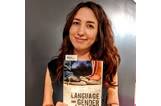
English Studies Department student wins best presentation award in Sociolinguistics unit
Congratulations to Ms Pella Massarou, student of the English Studies Department, whose presentation 'Attitudes of Chinese students towards English in Education' was voted as the best in her group and is the winner of the Best Presentation Award in the Sociolinguistics unit for the academic year 2018-19! Every year all English Studies Department Level 2 students are asked to deliver an oral presentation on a topic of their choice for the purposes of the Sociolinguistics unit. Before receiving feedback from their lecturer, Dr Zoi Tatsioka, students are asked to evaluate their peers using a comprehensive feedback form. This exercise aims at familiarising students with the assessment criteria used by the Department so as to help them improve their performance. Based on these peer evaluations, one of the students wins the best presentation award which is a book on the specific area of study.
25/06/2019

New Bachelor's programmes by our English Studies Department
The English Studies Department of CITY College, International Faculty of the University of Sheffield is happy to announce the launch of new Bachelor's programmes for the academic year 2019-2020. The new undergraduate (Bachelor's) programmes are listed below: BA (Hons) in English Language, Linguistics and Literature BA (Hons) in English Language and Communication The BA (Hons) in English Language, Linguistics and Literature offers a solid foundation in the study of language, linguistics, literature, language teaching, translation, media and film providing students with theoretical knowledge as well as practical skills, thus enhancing their employability profile. This innovative programme is ideal for anyone who is interested in becoming an English language teacher, a linguist, a literary scholar or wishes to pursue a successful career in translation, media, publishing, journalism, or education. Combining English Studies with Communication and Business Studies, the BA (Hons) in English Language and Communication offers an interdisciplinary curriculum including the study of linguistics, language teaching and translation, but also communication, media, marketing and management. The programme is addressed to candidates who are interested in becoming English language teachers or linguists, or wish to follow an exciting career in media, public relations, marketing, advertising, translation, journalism or education. Both programmes will be taught in the English language starting in October 2019. Interested candidates may contact the English Studies Department or our Admissions team at acadreg@citycollege.sheffield.eu. Message from the Head of the Department: We are looking forward to welcoming candidates to our new programmes in the academic year 2019-2020. As a Department we take pride in offering top-quality education and an unforgettable learning experience to all of our students in a supportive and inclusive environment. That is why our new programmes have been meticulously designed by experts in the field of English Studies and informed by the latest trends in education and research. Using a large variety of learning and teaching methods, we provide students with the opportunity to develop core skills, acquire in-depth knowledge and increase their employability prospects. Dr Zoi Tatsioka, FHEA Head, English Studies Department
24/06/2019
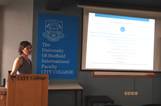
The English Studies Department is introduced to copywriting as a fruitful career prospect
Tuesday, 21st May, 2019 signals the last Personal and Professional Development Seminar of the English Studies Department for the Academic Year 2018-2019. This final but far from last seminar introduced a prosperous and intriguing career avenue to the students of the English Studies Department. Our guest speaker, Ms Tania Minogianni, Senior Copywriter delivered a seminar titled: Writing for Brands: A binding force between marketing and people. What initially appeared as an introduction to the arena of copywriting turned out to be much more fruitful. Ms Minogianni immediately gained the audience’s attention by presenting a story about Ioannis Kapodistrias and how he changed the story of the potato – a product he introduced to Greek culture. His technique of showing how significant and valuable the potato was prompted the interest and curiosity of the public to the point where this product became and continues to be a staple in Greek cuisine. According to Ms Minogianni this change in the story of the potato is akin to branding. More specifically, according to Ms Minogianni: “A brand is a synthesis of all its communications, its operations, its locations, its people and products, its services, its reputation, its symbols, and in today’s digital arena it is also, the audiences’ comments about it. A brand is like a story!” And just like a story it requires people with imagination, creativity and a proficient grasp of language and techniques capable of telling and even showing that story. What is, therefore, the role of a copywriter? Their role is to craft strategically-driven brand stories that trigger action. Copywriting is writing for conversion. This includes writing from the brand name to the larger scale of the brand platform. As Ms Minogianni informs, this can include advertising print, TV and radio spots, website content, outdoor billboards, brochures and flyers, advertorials, blog posts, newsletters, white papers, packaging copy and press releases. A copywriter’s tasks include: editing, social media updating, proofreading, training, ghost writing, speechwriting, interviewing, conducting SEO audits and keyword searches as well as voice direction, photo searches and video editing. A copywriter’s credentials should include – but are not restricted to – a college degree in marketing, or liberal arts, or communication in addition to curiosity, a thirst for knowledge, critical thinking, empathy and listening skills, a love for language (reading and writing) as well as stamina and resilience both in order to see projects through but also so as to manage cases of rejection. In today’s society of the internet, social media and branding, copywriting can be pursued in various areas as a profession in itself or the skills required for it can prove necessary and beneficial in other occupations. What does it take to make it as a copywriter? Generally speaking what most professions may require: determination, staying up-to-date with news, knowledge, and developments, writing, rewriting and reading a lot, as well as updating one’s training by attending events and seminars. With all this in mind, Ms Minogianni ended her presentation with the case study of Hospey, who sought an employment opportunity not by sending a traditional CV but by tweeting his potential future employer about a website he had created instead. What can we take away from this study in connection to Ms Minogianni’s presentation? To pursue a career in copywriting is to be authentic, be unique, to love reading and writing and to be knowledgeable, current with the times and creative.
24/05/2019
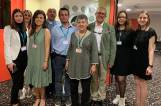
The English Studies Department co-organises the 6th International Language in Focus Conference in Dubrovnik
The 6th International Language in Focus Conference: ‘Language, Research, and Teaching in the 21st Century’, co-organised by Çukurova University, Turkey and the English Studies Department of CITY College, International Faculty of the University of Sheffield has been successfully completed. The 3-day conference, which took place at Importanne Resort in Dubrovnik, Croatia on May 2-4, attracted academics and researchers from various institutions around the globe. In particular, the conference featured over 180 presentations in six parallel sessions and welcomed attendees from more than 40 countries from all over the world. Moreover, the keynote speakers included inspiring and prominent figures in the fields of applied linguistics and language teaching; namely, Guy Cook, Emeritus Professor of Language in Education at King’s College London, Susan Hunston, Professor of English Language at the University of Birmingham, Suzanne Romaine, Merton Professor of English Language at the University of Oxford until 2014, Nina Spada, Professor in the Language and Literacies Education program at the University of Toronto and Penny Ur, Professor at Oranim Academic College and Haifa University in Israel. David Singleton, Emeritus Professor at Trinity College Dublin, was the guest of honour. The Department had a strong presence at the conference as apart from Dr Zoi Tatsioka, Head of the Department, who was one of the conference organisers, Dr Vicky Papachristou and Ms Maria-Araxi Sachpazian, lecturers of the Department, delivered an enlightening talk on ‘Teacher Identities: A Comparative Study in the Construction of the Teacher-self in Greece and Europe’. Furthermore, Ms Arta Musollaj, PhD Candidate at the School of English was a member of the organising committee but also had the opportunity to present her work on ‘Attitudes towards Minority Languages in Kosovo’. The English Studies Department has forged a strong collaboration with Çukurova University and Associate Professor Cem Can, President of Language in Focus Conferences. Thus, we are pleased to announce the co-organisation of the 7th International Language in Focus Conference in Valletta, Malta in 2020.
15/05/2019
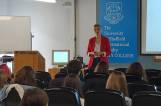
The English Studies Department Sees that it is all in the Lexis
The month of May would not see The English Studies Department without an educational and informative seminar. This time the focus was on a language component some may view as minor while others may argue that it is paramount and quite challenging. If there’s one thing that is certain it is that we cannot communicate without words, without vocabulary. Dr. Thomai Alexiou addressed the matter of vocabulary in her seminar titled: Measuring Vocabulary in Young ESL Learners which was delivered on Tuesday, 7th May, 2019. The significance of vocabulary is evident from very early ages and vocabulary development is paramount in foreign language learning. As Dr. Alexiou informs, syllabi and curricula now provide explicit information on vocabulary content and teaching through carefully compiled word lists. Testing centers and teaching materials also place greater emphasis on vocabulary and some even adopt a Lexical Approach to foreign language teaching. Vocabulary can be acquired almost everywhere both in and out of the classroom but the latter requires higher motivation. Dr. Alexiou goes on to explain the different types of teaching frameworks that permit a greater emphasis on vocabulary and are both appropriate and engaging for young learners. These are: story-based; TPR (total physical response) and games; arts/crafts/drama; songs/rhymes and technology. A key feature in the above mentioned frameworks is the matter of repetition as this is vital for all learners. In addition, as Dr. Alexiou highlights, cartoons are a great source for teaching vocabulary. The example of Peppa Pig is one that exposes learners to both frequent and infrequent words while also raising the interest and curiosity of learners and instilling pedagogical values regarding friendship, good behavior, manners, etc. In fact, this poses as an area that is still in need of further research. Dr. Alexiou also stressed the matter of vocabulary retention and the need to repeat and recycle lexical items and be exposed to them so as to transfer them from our short term to long term memory. Thus here, as Dr. Alexiou explains, the relation between L1 and L2 is important and in cases such as Greek and English much easier. A Greek native having acquired lexical items and concepts in Greek has but to relabel and redefine when learning English for instance. The task is much more difficult in the case of young Chinese students for instance. Thus, while a variety of vocabulary tests exist they may not necessarily be effective, informative or representative of what learners actually learn, acquire, understand or can produce. Evidently, assessing vocabulary can be as challenging as teaching it. Various parameters have to be met such as the testing method, if learners have been taught the respective vocabulary, if the instructions/format are clear and if the content is relevant. It is at this point that Dr. Alexiou brings the development of Pic-Lex: a test tool which is intended for very young learners and assesses receptive vocabulary size from picture cues. Evidently, it is not a matter of whether we should be teaching or learning vocabulary. The question that is currently of interest is how much vocabulary and what vocabulary should be taught, how it should and can be taught and in what ways should it be assessed.
09/05/2019
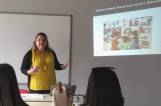
English Studies Department MA Student Presents her Work at the ELTA National Conference
Ms. Lindita Budini, student of the MA in Applied Linguistics with TESOL, presented her work at the 11th English Language Teachers’ Association of Albania (ELTA) National Conference “Embodied Brains, Social Minds, Cultural Meaning – Emotions and Social Behaviours as Fundamentals of Learning”, which took place on May 3-4 at the Faculty of Social Sciences in Tirana. More specifically, Ms. Budini delivered a workshop titled “The Five ‘A Words’ that Sustain Learners’ Motivation” based on Jeremy Harmer’s ‘motivation angel’, which discussed the five stages that contribute to learner’s initial motivation: affect, achievement, attitude, activities and agency, combined with strategies for building good rapport, keeping learners engaged and reinforcing their belief in success.
09/05/2019
  5 from 13 5 from 13   |